Out with the old and in with the new. On June 2nd the abstract art by the Willamette Abstract Group will be removed and on June 3rd our new exhibit will be installed. Our featured artist for June, July and August will be Carol Chapel, longtime local resident and creator. Carol’s paintings usually focus on nature and our environment. When asked about her style, Carol said “I recently saw some drawings done by a young man who is non-verbal. The way he processes and reacts to information is through drawing. I realize that we share common ground. I certainly am not nonverbal, but I too react and process information through my artwork. It helps my understanding of the subject. I do not necessarily strive to make an accurate reproduction of what I see, but I do want to bring the viewer into my understanding of it.“
I hope you find Carol’s work thought provoking and inspirational. If you are interested in helping to choose art for future exhibits, please contact Brian E.
Enjoy some delicious, aromatic Café Justo coffee. When you order Café Justo coffee, a part of your purchase will be used to provide Café Justo to migrant shelters in Agua Prieta, Nogales, Sasabe, Sonoita, Tapachula, Gomez Palacio, and Matamoros in Mexico, as well as shelters in Columbus, Ohio, and in Silver City and Deming in New Mexico — through our “Love Mercy, Do Justice” ministry. That’s the “compassion” part of the “coffee and compassion.” Café Justo makes a great cup for you and me. Many hands go into the processing of your coffee before it ever reaches your cup. Coffee is one of the most labor intensive crops. Your purchase here helps communities in Mexico thrive. (We regret that DECAF is not available until further notice.)
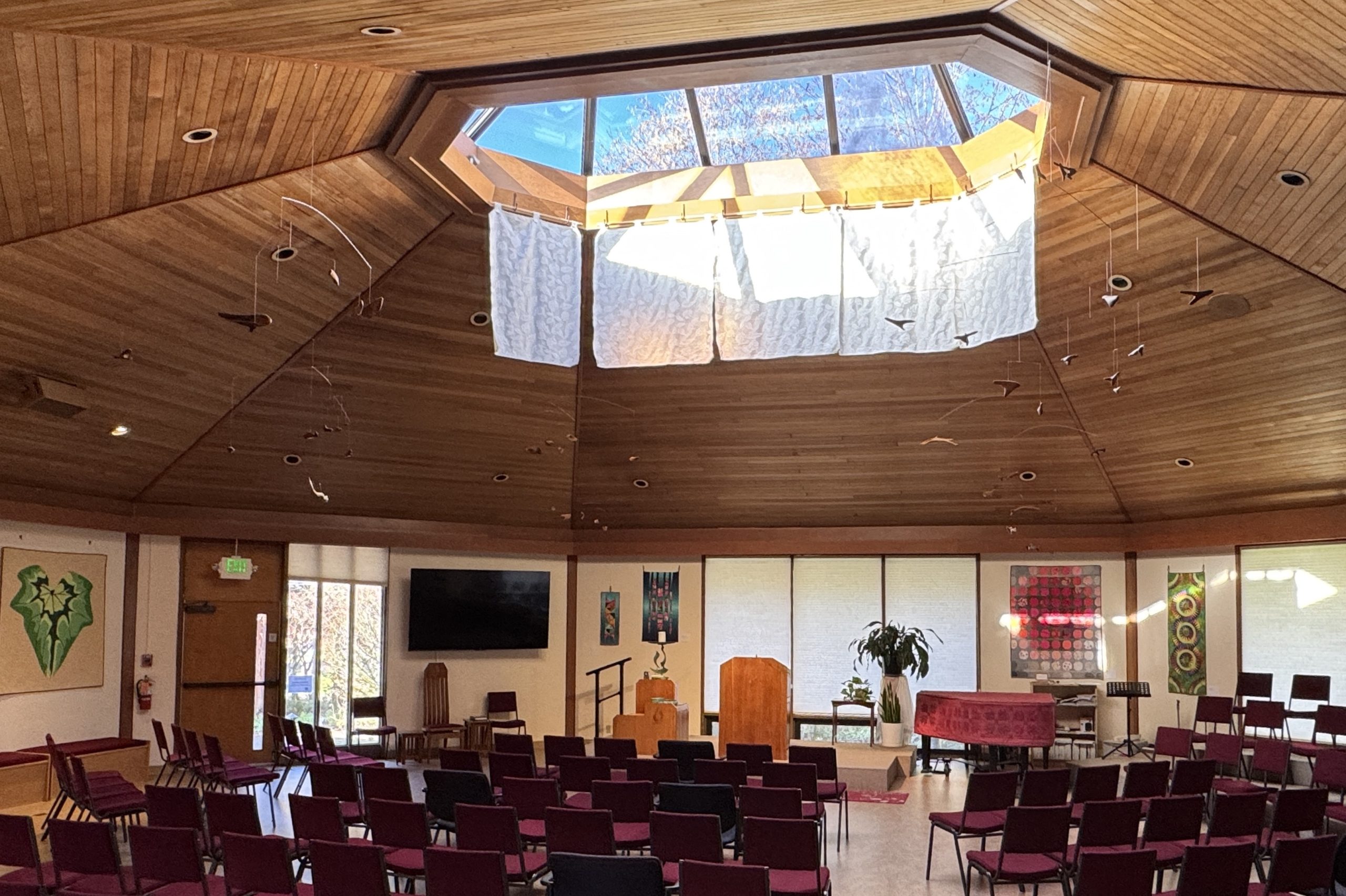
The last Community Music Circle before we take a break for the Summer will be Monday, June 1st at 7-8:30 PM in the sanctuary. Hope you can make it!
What’s that you say?
Did I hear someone ask “what is a community music circle?”
So glad you asked: The community music circle is when a group of really great people from the Fellowship come together to play and sing together. You can sing or bring your instruments. All skill levels are welcome. It’s a fun time and there are usually surprises – most of them unplanned!
If you’ve never come to one, give it a try! If you’re a regular, we have a new songbook with a bunch of familiar songs to try out.
Citizens and non-citizens have rights guaranteed by the 4th and 5th amendments of the U.S. Constitution. I.C.E. agents may not enter or search a person’s place of residence without a signed warrant and individuals have the right to not answer their questions. Spanish-English Know Your Rights cards are available on the table on the left outside the Sanctuary door. Feel free to pick one up for yourself or a friend who may need one.
Music plays many roles in our lives, but the one emphasized in today’s service is that music has always been one of the ways people carry home with them. We may leave places behind – whether by choice, necessity, or force – but the songs we sang in the various homes of our lives remain. Music can remind us where we came from, with memories, language, faith, and atmosphere.
The piano music for this service brings together two ideas: song as a source of expression and community, and music as a vessel for heritage, memory, displacement, and belonging.
The prelude began with a gentle cover of Woody Guthrie’s This Land Is Your Land, with occasional new harmonies that help us hear the song a little differently. Instead of the rousing version we are used to, it becomes more reflective. Are we living as if this land belongs to everyone? Who has been welcomed, and who has been left out? If imagined through through the lens of immigration and refuge, the song becomes a statement of a shared home, but also a dream that we fervently wish will be true someday: that “home” might be generous enough to include all who seek safety, dignity, and a place to belong.
Following This Land is Your Land, I played Paul Simon’s American Tune, a song based on Johann Sebastian Bach’s hymn O Haupt voll Blut und Wunden (“O Sacred Head Now Wounded”). It is weary and searching as it refers to uncertainty and struggle when in the United States, far from home. While not particularly uplifting view of life in America, it offers a glimpse of hope in its final phrase.
Many’s the time I’ve been mistaken And many times confused Yes, and I’ve often felt forsaken And certainly misused Oh, but I’m all right, I’m all right I’m just weary to my bones Still, you don’t expect to be bright and bon vivant So far away from home So far away from home
I don’t know a soul who’s not been battered I don’t have a friend who feels at ease I don’t know a dream that’s not been shattered Or driven to its knees Oh, but it’s all right, it’s all right For we’ve lived so well so long Still, when I think of the road we’re traveling on I wonder what’s gone wrong I can’t help it, I wonder what’s gone wrong
And I dreamed I was dying I dreamed that my soul rose unexpectedly And looking back down at me, smiled reassuringly And I dreamed I was flying And high up above, my eyes could clearly see The Statue of Liberty sailing away to sea And I dreamed I was flying
For we come on the ship they call the Mayflower We come on the ship that sailed the moon We come in the age’s most uncertain hour And sing an American tune Oh, and it’s all right, it’s all right, all right You can’t be forever blessed Still, tomorrow’s going to be another working day And I’m trying to get some rest That’s all I’m trying to get some rest
Many are familiar with Joe Raposo’s Sing from the Carpenters’ rendition, but not everyone knows that this beloved song was originally created for Sesame Street. Raposo was a renowned composer employed by Jim Hensen who also penned the Sesame Street theme and songs “C is for Cookie” and “It’s Not Easy Bein’ Green”. He was also the child of Portuguese immigrants, a fact which gives new depth to this beautiful children’s song. Singing is one of the oldest ways to preserve identity, pass on memory, and join a new community without erasing where one came from, and singing with others does a great deal to help us find a sense of belonging.
The postlude, Make Your Own Kind of Music, was made famous by Cass Elliot (a.k.a. Mama Cass, Elliot’s less preferred nickname). All four of Elliot’s grandparents were Russian-Jewish immigrants. This top forty hit’s message – to keep singing your own song even if others do not immediately understand it – aligns strongly with experiences of displacement and belonging. Immigrants, refugees, and their descendants often live between cultures as they treasure inherited stories, accents, customs, music, and memories while trying to make a home in a new place. The lesson from this song applies to both music and the world in general: one’s unique voice is not only not something that should be hidden in order to belong but is something that helps enrich the larger community.
Wow! One year ago this month I was reading all about your congregation, from afar. I examined statistics about your history, your membership, your RE program, and financial matters. I looked at how many ministers have served you, how the building was built, and milestones important in your congregational life. I tried to imagine being with you all in role of Interim Minister. How lucky I was then, to get to interview with the Interim Search committee, who were warm, friendly, organized, and clear. I then spent many, many more hours, researching Corvallis as a place to live.
This kind of imagining is powerful. Because you all set a vision, and I was open to a vision, our paths were able to meet and align.
Please ponder this kind of power. Please consider the kind of careful preparation that creates a solid, factual foundation, from which the winds of the universe can blow to attract positive energy.
Perhaps there is an area of your life right now where you would like to “get your house in order” and take stock of who you are.
The Annual Meeting on May 17 is also online. If you are unable to attend the Annual Meeting in person, it will be available on Zoom using the same link as the Sunday Service, included below. You will also be able to vote using Zoom. The meeting will start after the service at approximately 11:30 am.
This week we are cancelling NeuroDivergence and Mental Health Support Group due to the Fellowship’s annual membership meeting. Groups will continue, going forward, on the 1st and 3rd Sundays of each month at 8:30 AM.
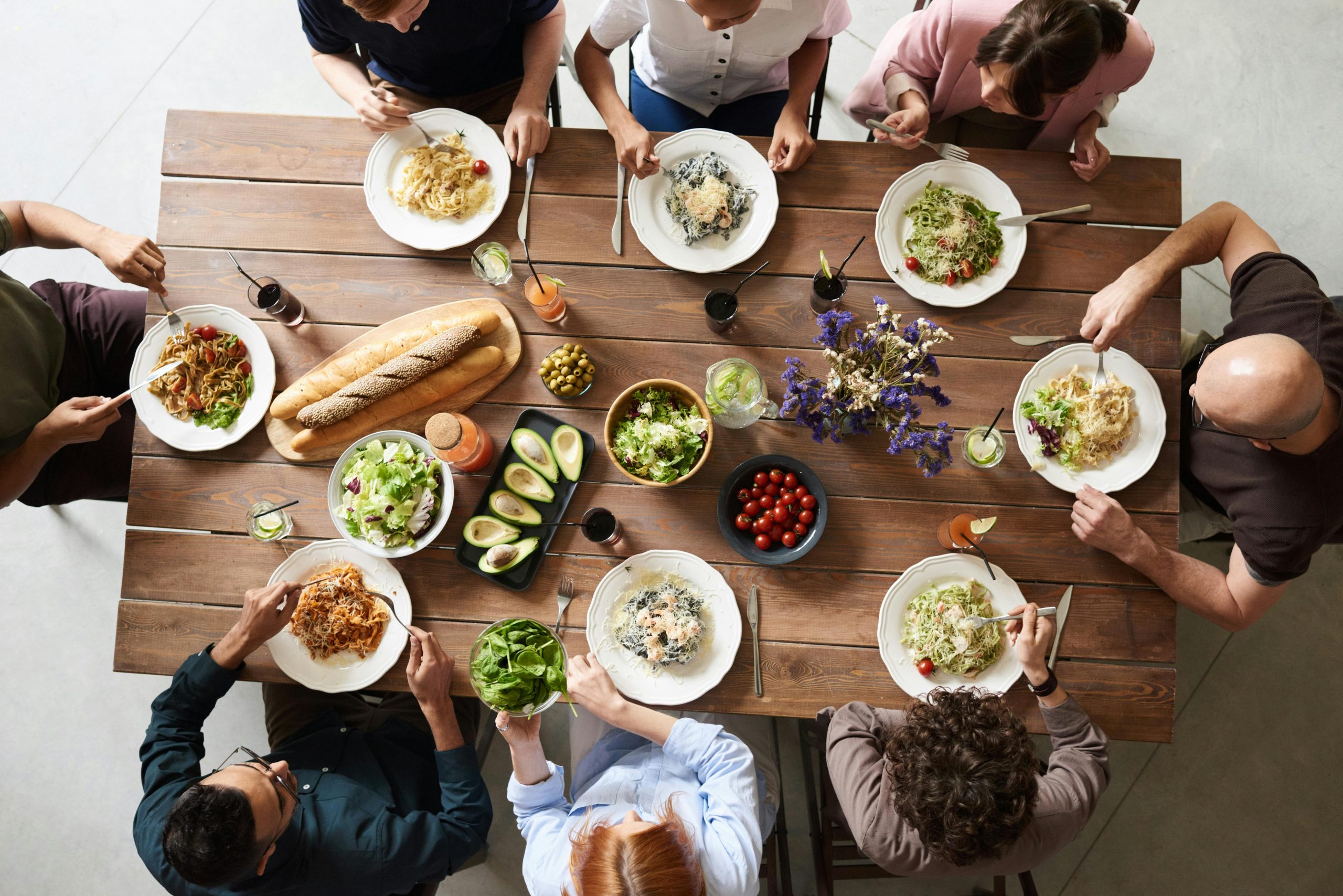
Summer is almost upon us, so we invite you to join us for a special luncheon to celebrate this time of year on Saturday, June 20th at 12:30 PM.
This will be in the Social Hall and is sponsored by the Community Events Team. The menu will feature Transylvanian and other traditional or popular Romanian dishes; see the menu below! You can reserve a spot for lunch by submitting the form through the button below:
You will also find a sign-up table in the foyer or social hall on the two Sundays before, during and after service.
We are limiting attendance at only 48 guests this time, so be sure to get your reservation in early to claim your seat at the table.
The suggested donation is $15 and all proceeds after food costs will be passed on to the Global Partners Team for their charitable work in our community.
If you’d like to be a part of this and help out, you can volunteer to assist with food preparation or Setup or service or cleanup, and if you can help for at least an hour, you can dine with us for free as a thanks for your kind assistance. Here’s a link for volunteers:
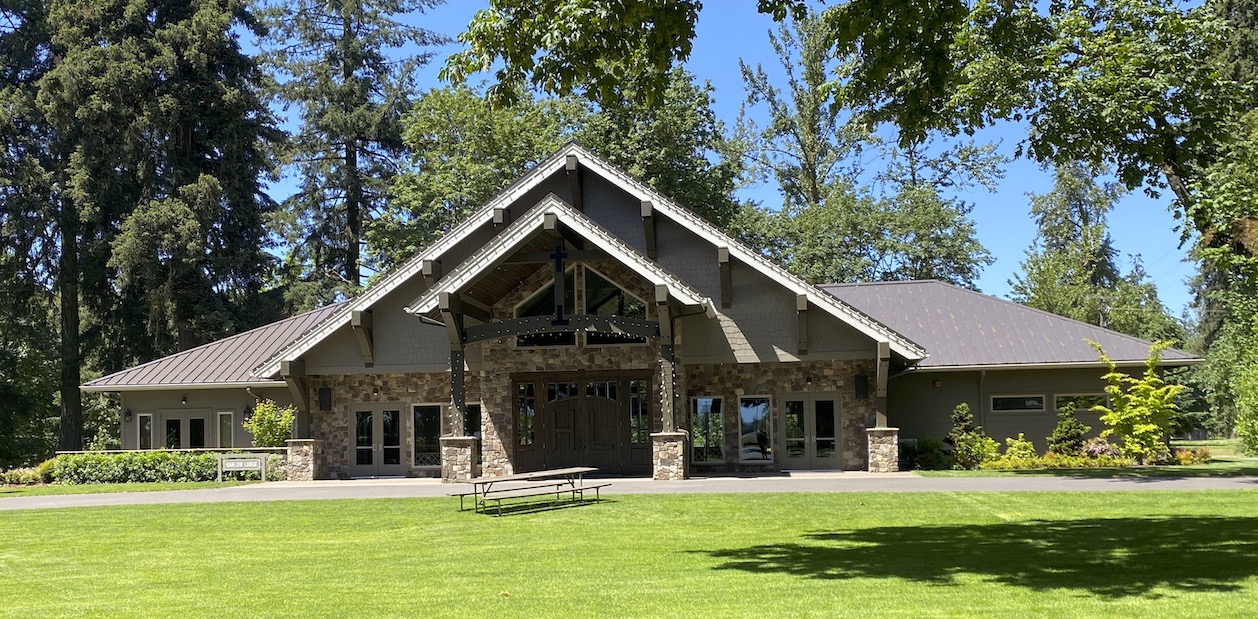
This year’s retreat will be October 2-4 at Camp Harlow in Eugene. More information and a registration link will be available soon. The cost per person will be about $250 (includes housing and meals – final amount be published soon). Partial and full scholarships will be available as well as assistance for overnight caregivers. Requests for financial assistance will be kept confidential. Due to the off-site nature of this year’s event, pre-registration will be required. Please send questions to womensretreat@uucorvallis.org.