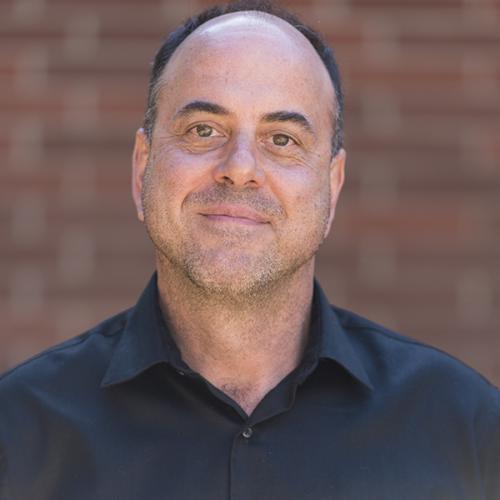
The new Board of Directors has begun their service! John Bailey is now serving as Secretary of the Board, and so has taken ownership of the email address secretary@uucorvallis.org. Priscilla Galasso will no longer be checking the Secretary email. If you wish to reach Priscilla, please look up her contact info in our online member directory.
You can see the entire Board of Directors, and the contact info for the Officers, at uucorvallis.org/about/board/.
Here is a little background on the music that was played this morning at the service.
Prelude: Coming Home, by Carolyn McDade
If you don’t know Carolyn McDade by name, you probably know some of her songs. Three that we do often at UUFC are Come Sing a Song With Me, We’ll Build a Land, and Spirit of Life.
A few weeks ago a book of songs by Carolyn McDade appeared in the music office. It sat there for a few weeks until I finally found some time to play through the songs. I found one called Coming Home which had a tuneful melody and nice chords. Jumping ahead to this morning, I was still trying to decide what to play for a prelude, and I remembered this song.
If you know the song, you may not have recognized it. Or you might have only recognized little snippets of it. Before I started at UUFC I worked with another music director who always encouraged me to improvise. He had an interesting strategy that worked surprisingly well: play a version of a song in such a way that people barely recognize what it is. The idea is to use the song as a jumping off point, but to make yourself invent variations on the chords, melody, and rhythm. I do this often for the prelude – sometimes with songs we’re singing on that service, and other times like today I pick other songs.
I wish I could find a publicly available recording for you, but I haven’t been able to find one. Here are the lyrics of the chorus:
We’re coming home to the spirit in our soul,
We’re coming home where the healing makes us whole,
Like rivers running to the sea,
We’re coming home,
We’re coming home.
Offertory: Aria from the Goldberg Variations by J.S. Bach
There is a well-known story about this piece that may or may not be true, but I’ll tell you anyway. The story goes that Bach wrote it at the request of Count Kaiserling, an insomniac who asked Bach for a set of variations to help cheer him up when he couldn’t sleep. Goldberg was the name of the harpsichordist who lived with the count and was probably the first performer of the Goldberg variations.
I chose it because I wanted to play something that represented part of the musical ancestry of so many of the songs we sing on Sunday mornings. If you ever look at the index of composers in the back of the hymnal, you’ll see quite a few songs are either composed or harmonized by J.S. Bach, and there are many more that are emulating the choral style for which Bach is well-known. For what it’s worth, that includes pretty much any of our hymns that sound like they should be played on the organ.
It’s a theme with variations, but I only played the theme this morning. I highly recommend listening to the entire piece in one sitting someday. Although it was written for the harpsichord, one of the most famous recordings of the Goldberg Variations is done by a pianist named Glenn Gould. Here is a video where you can watch him play it. He is known for his quirky mannerisms and humming along to the music, which makes it kind of fun to watch as well as listen to:
Postlude: In My Life, by John Lennon and Paul McCartney
I played “In My Life” by the Beatles for a few reasons: first because the lyrics talk about the past and how some things change, and others stay the same, and all have an impact on today, so I thought it had some connection to today’s theme about history and learning from the past. Second, because it contains a short Baroque-sounding solo in the middle of the song, so I thought it might tie in nicely with the Bach piece I played for the offertory.
After the service Carl, our current board president told me an interesting story about that solo. I was practicing it this morning and realized that it was kind of tricky to play, and I was having some trouble with it. Apparently George Martin, the person who played it on the album, had trouble with it too. Carl told me that the solo was actually recorded at half speed and sped up for the album, which made me feel better.
I found this recording of the solo the way it was recorded at half speed, and then the original recording where the solo is sped up:
I hope you found it interesting to hear about the music. Usually a handful of people come up to me after a service and ask me about things I played, so I wrote this in case there are others who are also curious but didn’t come up and ask.
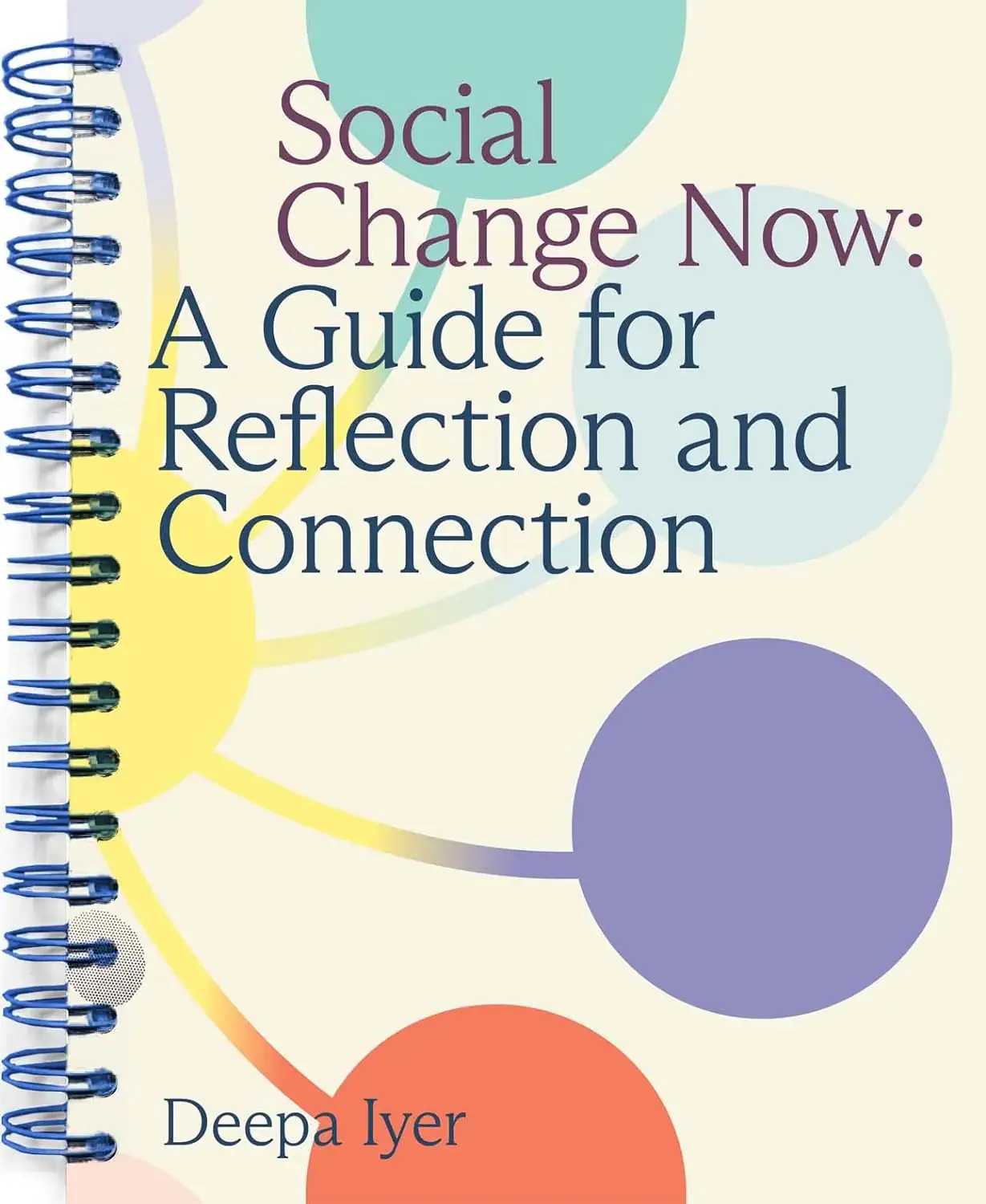
Join the Justice Council and RE Council for a group exploration of this year’s UUA Common Read. The book this year is Social Change Now: A Guide for Reflection and Connection by Deepa Iyer (Skinner House). This book provides tools for Unitarian Universalists to grow more authentic, connected, and effective as individuals and communities as we pursue transformative justice together.
In 2026, for the first time, the Services Auction was held off-campus. This was an experiment, and we ask for feedback using the linked form https://forms.gle/XerdBHzwPQmj2MZ2A to share their views on the Scout Lodge and their preferences with respect to hosting future auctions at UUFC, the Scout Lodge, or, potentially, other off-campus sites. Responses will be used by the fundraising team in making its recommendation to the Finance Council and Board on the venue for future Auctions.
If more than one adult in your household attended the Auction at the Scout Lodge, please ask them to also complete the form https://forms.gle/XerdBHzwPQmj2MZ2A.
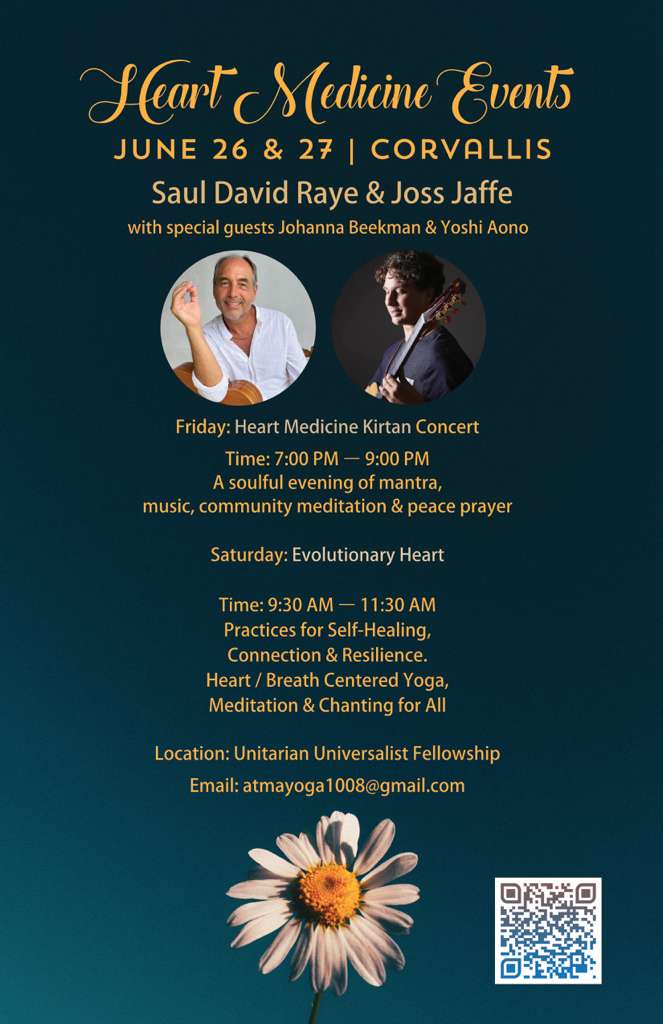
Join us for a special set of Kirtan and Yoga! There will be 2 events.
Friday night (June 26, 2026, 7 PM in the Sanctuary) will be a beautiful devotional Heart Medicine Kirtan Concert.
Saturday morning (June 27, 2026, 9:30 AM in the Sanctuary) will be an all levels healing yoga, qi gong and meditation practice with live music called ‘Evolutionary Heart.’
We are looking forward to connecting with friends old & new and sharing some community connection & heart medicine.
The Inquirers Series class this week (June 21, 2026) will be Membership 101. The Care & Support class will now be on June 28. This swap is temporary; the regular class sequence will continue after June 28.
Membership 101 is one of the three classes required before signing the membership book. If you’re interested in becoming a signed member of the Fellowship, you can read more on our Path to Membership page.
June 19, 2026 Rev. Alex McGee, serving as Interim Minister
Dear Congregation:
I am writing to lift up three things right now in the life of your UU Fellowship: history, right relations, and UU connections beyond this town.
First, please take seriously the responsibility as a member to reflect on the history of UUFC. You have a wonderful opportunity coming up on June 28 or July 16 to hear and see a thoughtful and informative presentation from the Transitions Team. The Transitions Team is tasked with aiding in the interim process, which includes considering what pressures, opportunities and crossroads affected the Fellowship that you are in today. I have been impressed over the past six months to see the hundreds of hours that this team has put into gathering UUFC to offer you. Please look for a chance to talk about UUFC history with the Team members: Russ Anderson, Laurie Reed, Sheryl Stuart, Rachel Houtman, and Robin Lancaster.
Second, this congregation has utilized a Right Relations Team in the past to help with certain situations. Last Winter, the Board activated a Right Relations Team to be maintained as a regular resource for listening and facilitating, as well as sharing tools with the congregation. Right now, the members are Susan Christie, Claudia Hall, Joyce Marvel-Benoist, and Mark Aron, working in conjunction with the Minister. All are skilled in interpersonal relations, and in addition, are looking at UUA resources designed to strengthen Right Relations Teams. If you would like to access their assistance, please let me know and I will make the connection, or reach out to one of them and they will circle me in.
Third, I am so rejuvenated by attending General Assembly and UU Ministry Days online this week! I see such amazingly thoughtful processes, such as having five GA support teams:
Covenant Team to help when relations are ruptured
Systemic Justice Team to track structural improvements for future events
Accessibility Team to reduce barriers to participation
Chaplaincy Team to hold spiritual space for individuals
Process Team to report at the end of each session how they observed inclusion, lack of inclusion, or other variations from the democratic goals
So, I wonder…what if UUFC had all five of these teams? Is that a dream you share? Do you already achieve some of these in other ways? I think you do.
Please mark your calendar for June 23-27, 2027 to attend General Assembly in San Jose, CA, or online from here in Corvallis.
My heart is bolstered by a sermon given on Wednesday by the Rev. Joseph Santos-Lyons, who said “belonging means staying in relationship despite disappointment.” He defined accountability as “mutual and liberating relationship with one another.” He reflected on times when he was frustrated and let down by Unitarian Universalism. He observed: “the most important part of the story is not that I stayed, but the people who helped me stay.” And so I ask you in the UU Fellowship of Corvallis: how are you practicing belonging, accountability, and helping others stay?
It is fitting that Pride and Juneteenth both occupy the same month, as both focus on being free, being seen, and being ourselves. The human race has made significant strides toward liberty and inclusion, but “othering” still rears its ugly head at times, and there is more work to be done. Countless works of music would have been appropriate for today’s service, and it was challenging – but fun! – trying to select today’s music.
https://youtu.be/oZssN8_CkzE?
The prelude opened with George Shearing’s jazzy, modern arrangement of Somewhere Over the Rainbow, the beloved ballad composed by Harold Arlen for The Wizard of Oz. Full of wistfulness and longing, this song about wishing for a place “where troubles melt like lemon drops” has spoken to generations of people with dreams of a world without fear and exclusion. The famous melodic leap from “Some” to “where” demonstrates some subtle text painting; the octave ascends as if reaching and searching for this new idyllic place. Renowned jazz pianist and composer Sir George Shearing reframed the familiar melody with new harmonies and dissonances that add complexity to the song, while retaining the hope of the original. Shearing played his version of this song as an upbeat tune when playing with his jazz trio, but the work is arranged so well that it is often played as a piano solo with a slower, reflective air, as performed today.
https://youtu.be/LPn0KFlbqX8
True Colors was originally created with a much different vision in mind. Composer Billy Steinberg (who also penned several other commercial hits from the 80s and 90s) originally wrote this as a gospel song in honor of his mother, trying to express the concept of a parent’s unconditional love for their child. His songwriting partner Tom Kelly thought that the idea of someone loving you exactly as you are was beautiful, and could be applied to all kinds of relationships, not just mother and child; so the two modified the song to express any and all unconditional love. Cyndi Lauper wanted to sing the song, and when Steinberg and Kelly listened to her recording, they were surprised and enamored by the lean, stark character of her rendition – a far cry from the song’s original gospel style. Its message is simple but powerful: our truest selves are not something to hide, apologize for, or diminish, and if we let our true colors shine through, there will be people who find them beautiful and worthy of love.
There are so many wonderful pieces of music about love, acceptance, equality, inclusion, pride, and Pride, and it was hard to narrow down which pieces I would select for today’s service. But I think I always knew that I would play Somewhere from the seminal West Side Story, by Leonard Bernstein and Stephen Sondheim. This song marks a pivotal point in the musical: Tony has accidentally killed Maria’s brother Bernardo, and the chance of any sort of happy ending for the lovers seems all but destroyed. They cling to the fragile hope that a life without prejudice, violence, and fear can still be possible “somewhere”. But the song isn’t just remarkable for its dramatic power; the composition is a marvel of melodic, harmonic, and text writing, frequently held up by performers, scholars, and composers as an example of a perfectly crafted song. The melody is full of reaching, grasping intervals, including the seldom used melodic minor seventh, leaning into the interval’s natural uncertainty. The unexpected harmonic progressions keep the song suspended between stability and uncertainty, and the phrases resolve a little differently than you expect them to, mirroring Tony and Maria’s emotions: frightened and unsure, but with moments of hope and tenderness. And the text…Sondheim’s lyrics in his own works are wickedly clever, very cerebral and extremely funny. But in Somewhere, he refrained from gilding the lily and the simplicity of his words transform this song into a prayer as simple as the things that Tony and Maria long for. They have no desire for riches or grandeur, glory or material possessions; they dream of the simple things that we would all have in an ideal world: safety, love, acceptance, and peace.
https://youtu.be/6CHdKORwPEQ?
Today’s postlude was I’m Coming Out, made famous by the incomparable Diana Ross. It is jubilant, demands attention, and is gloriously declarative. This song has been claimed long ago as a Pride anthem of visibility and self-acceptance. And through the lens of Juneteenth, it can also be heard as a celebration of liberation – freedom from oppression, and the freedom to experience joy, dignity, identity, and a rightful presence in the world. There is no shortage of joy in this song, and its energy felt like an appropriate way to end the morning. May we all know the freedom of coming out into the world as our true selves, and with pride in who we are.
BONUS ITEM #1 – BEHIND THE SCENES: Today’s music for reflection was going to be an outline – but not a full realization – of John Lennon’s Imagine, using the harmonic progression paired with fragments of the melody. However, due to a series of ridiculous events, this did not happen! Shortly after the service started, one of my contact lenses started shifting around; I suspect the small fan I had blowing on my face might have sent a speck of dust into my eye. Reduced to seeing with only one eye, I reached into my bag to grab my glasses, and then realized that they must have fallen out when I knocked my bag over last night. I slipped out to get the glasses I keep in my car, then came back in trying to be as quietly as possible. In my efforts to be inconspicuous, I squeezed my keys to keep them from jangling, but ended up squeezing the Tile tracker on my keys…which sets off a ringer on my phone even if it is silenced, so that I can locate it if lost. I spent the time that I would have pulled up Imagine on my iPad leaping into action to silence my phone instead, and then needed to start playing immediately, to avoid any dead space…as a result, I just improvised some delicate chord progressions, all while wishing I could start the day over! 🤣
BONUS ITEM #2 – O LOVE, by Elaine Hagenberg: If today’s choral anthem sounded familiar, revisit this blog post to find out how you already knew this song…