NOTE: The RE Newsletter that appears in the weekly announcements is slightly modified from the version sent directly to RE families. This year, we are making every effort not to share children’s faces on the public web, regardless of photo release status, and we do not publicly post dates and locations for youth events that take place outside of regular Sunday programming.
If you’re a parent or guardian of a child in RE, please check your inbox for the details you’ll need to help your child get where they want to be and to see your children’s adorable faces in action! If you’re a Fellowship member or friend, or a parent wondering whether UUFC might be what your family is looking for in a religious community, read on and enjoy this slightly abbreviated vision of RE.
“There are no passengers on Spaceship Earth. We are all crew.” — Marshall McLuhan
Greetings, Families!
We have officially launched into a new year of Religious Exploration, and I am so excited about what we are building together!
This year’s theme is Faith Gamified: Never Quest Alone, and we’ve already been on some epic quests together! Our kids aren’t just dropping into a different lesson each Sunday. They’re building relationships, developing shared language and practices, and in some of our groups, following quests that continue from one week to the next.
That means there are a few new things to know about how RE works this year, along with plenty of opportunities to eat together, play together, learn together, and generally make the Fellowship feel more like a village.
So grab your calendar, and read on!
OCTOBER EVENTS:
10/11 Family Breakfast is BACK! Register HERE each month, as able.
10/18 Child Dedications during the service
DATE UPON REQUEST Cluster-wide Youth Overnight. Registration is required.
10/25 Fellowship Trick or Treat for All Ages, after the service
PLAN AHEAD:
DATE UPON REQUEST OMG! Religious Field Study: Paganism. Registration for travel is required.
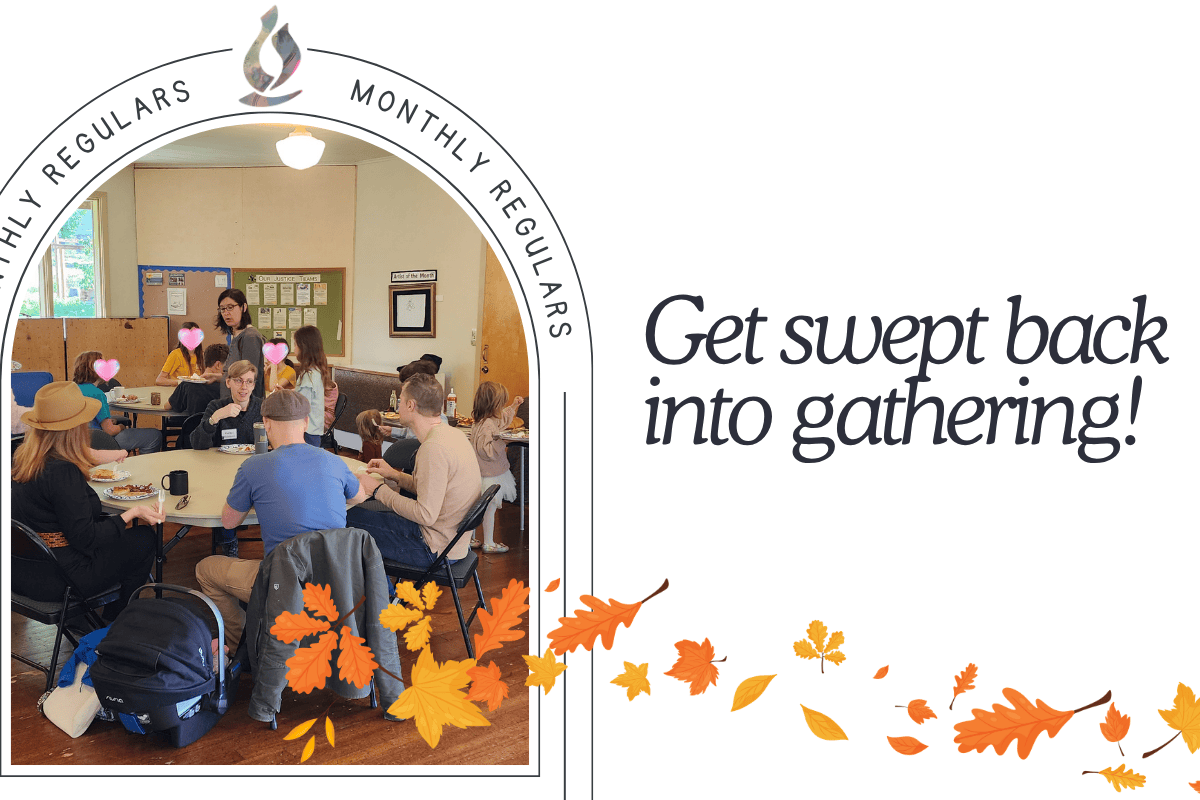
FAMILY BREAKFAST IS BACK!
Beginning in October, Family Breakfast returns on the second Sunday of each month!
Come to the social hall before the service for pancakes, bacon, coffee, and a chance to spend some unhurried time with other UUFC families. Bring something to share if that brings you joy and you are able, or simply bring yourselves. There is always enough.
One of our goals this year is to help children build relationships at the Fellowship that extend beyond their individual classrooms, and Family Breakfast is one of the easiest ways to help that happen. Register HERE, if you can, but show up even if you didn’t get around to registering.
Second Sundays | 8:50 AM | Social Hall
Our next opportunity forChild Dedication will be during worship on October 18.
Child dedication is our congregation’s ritual of welcoming and blessing children within the Fellowship and affirming the community’s commitment to accompany them as they grow.
If your family has a child (or three) you would like dedicated to the care of our congregation, or you’d like to learn more about what dedication means at UUFC, reach out to Skyla at dre@uucorvallis.org by October 11th.
Please note that this isn’t only for babies! Children of all ages, who wish to be ceremonially dedicated are most welcome to participate.
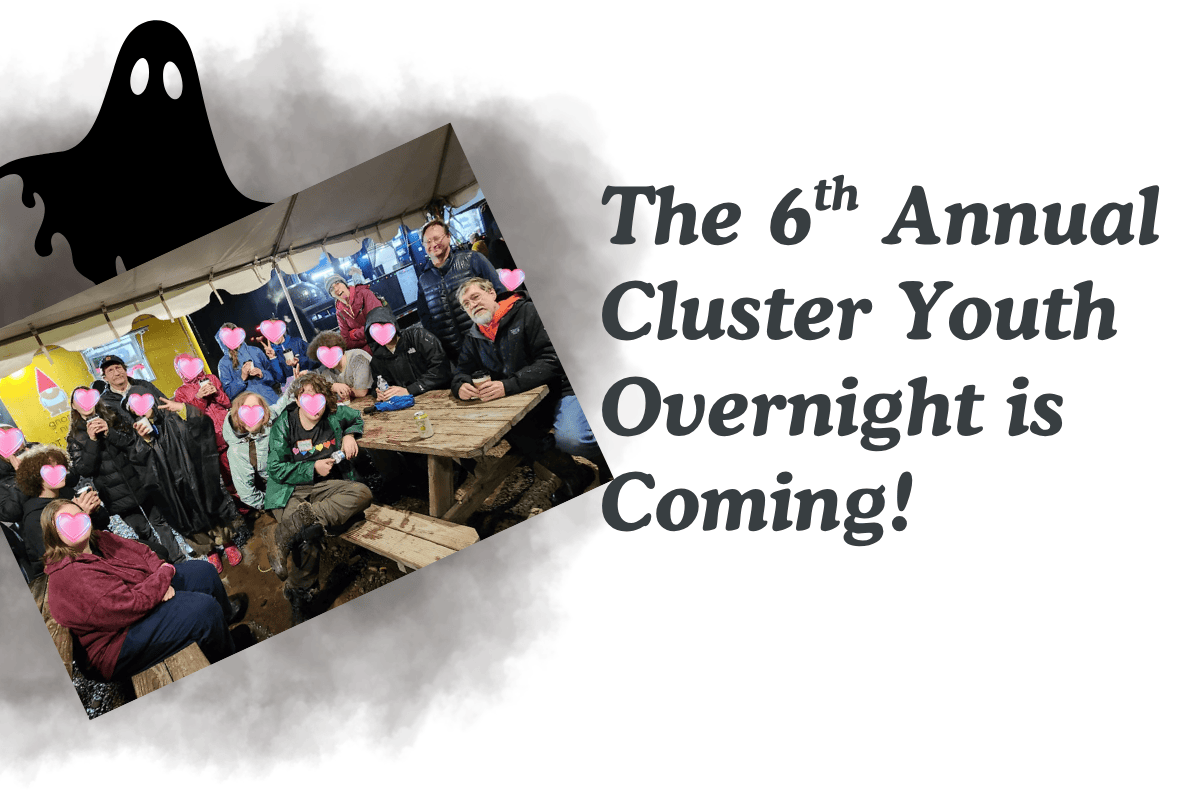
OMG! YOUTH OVERNIGHT, DATE UPON REQUEST
Our 7th–12th graders are invited to spend the night at the Fellowship with youth from other congregations around the Willamette Valley! This is our longest running post-covid youth gathering, and it happens right here in Corvallis every year.
We’ll gather in evening for pizza, games, covenant-making, a trip to a fun local haunt, candlelight worship, and probably considerably less sleep than the adults involved would prefer. The next day, we’ll engage in some worship and learning and have some seasonal fun before everyone heads home around noon.
Dates and useful info have been withheld and are available to any parent whose child would like to attend. REGISTRATION IS REQUIRED, so ask Skyla for more details SOON!
TEAMS AND COUNCILS TRICK-OR-TREAT AT THE FELLOWSHIP, OCTOBER 25
Come to church in costume!
After the service, children and families are invited to trick-or-treat through UUFC’s Teams & Councils, collecting goodies while your whole family gets to know some of the people and groups who make our Fellowship awesome!
It’s candy, yes. But it’s also a sneaky little intergenerational relationship-building scheme. And who knows? You might find the group you’ve been dreaming of joining and didn’t even know existed.
Costumes for children and grown-ups are highly encouraged. This event is for EVERYONE!
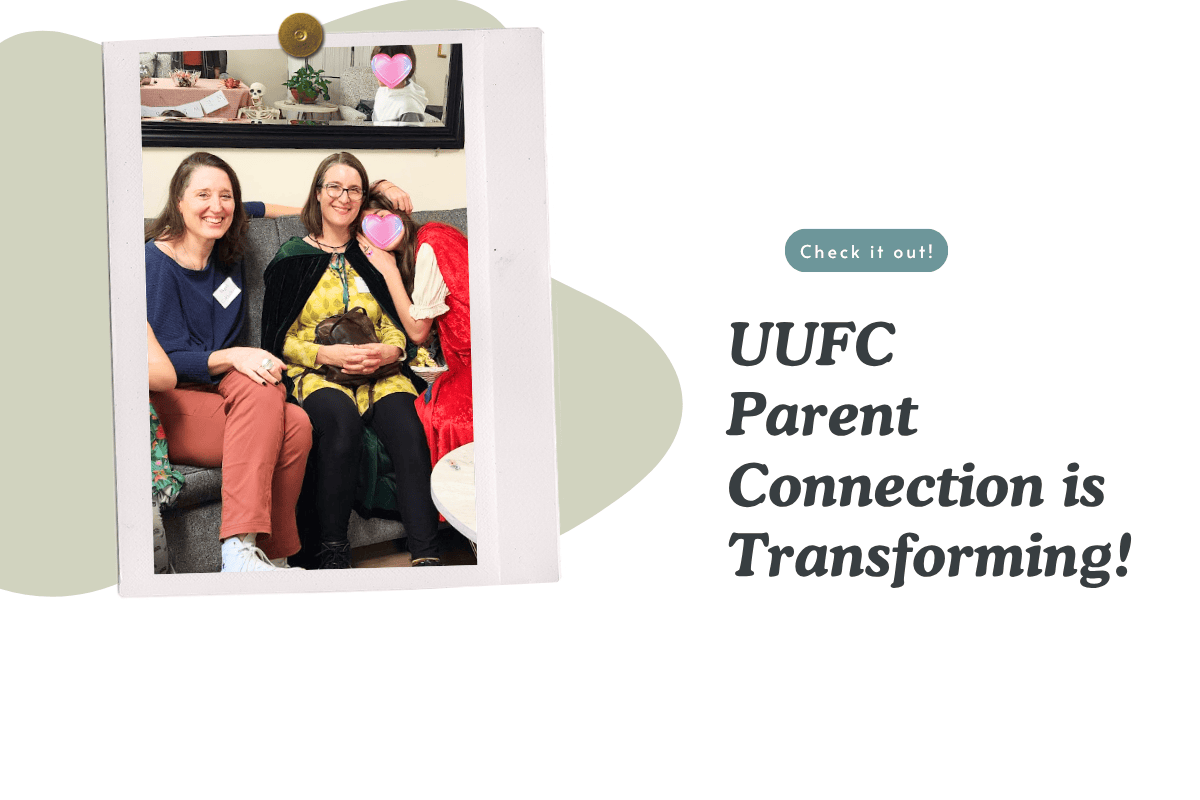
PARENT CONNECTION IS GETTING MORE CASUAL
Our beloved monthly Parent Connection Dinner is transforming into something considerably easier to fit into actual parent life: a UUFC Parents WhatsApp group.
Think of it as a low-pressure place to ask a question, share a resource, make plans for a park meetup, say does anyone else’s kid do this?!, offer up outgrown rain boots, or simply stay connected to the other adults raising kids in this community.
No monthly meeting. No childcare arrangements. No obligation to participate in every conversation. Just another little thread connecting our village.
Join the UUFC Parent WhatsApp group by using the link in the email sent to parents, or by talking to Skyla on a Sunday if you’re a new parent at UUFC!
New year, new adventures and a few new logistics!
Each age group has its own space, rhythm, and way of exploring this year. Here are the big things to know:
Wayfarer’s Cache: We know that kids can’t be here every single week of the year. We have a variety of family arrangements, circulating viruses, and fluctuating energy levels on a Sunday morning. BUT we’re dedicated to delivering the depth of Religious Exploration that can only happen when experiences build week to week.
Enter, the Wayfarer’s Cache! On the table outside of the RE Office (or somewhere in that vicinity, when the table is needed for other things) you’ll find printed Home Quests for our children and youth who occasionally quest elsewhere. These summarize what happened in each age group and are written to be engaging at the dinner table or while waiting in traffic. Parents who occasionally come without their children can grab home quests while you’re here. If all of you missed, email Skyla for a digital copy. This is not meant to feel like homework! It’s a quick, hopefully fun way to minimize the impact of absences while still taking our explorations on a deep dive, with a side benefit of family spiritual engagement!
Junior Worship Associates and Chalice Lighting Families:
Many of you signed up to be a chalice lighting family or for your children to be the Jr. Worship Associate and light the lanterns for us on a Sunday morning. THANK YOU!
And if you’re in an overwheming moment (who isn’t right now?), you might suddenly be wondering whether you signed up, and if so, what dates you signed up for. Not to worry! I’ve got you covered! Everyone who signed up during the Great REspawn will receive an automated reminder 3 days before your scheduled service. If the day arrives and you think, “oops! We’re totally out of town on Sunday!” or “There’s no way we’re going to be fever-free by Sunday!” just send me a text and let me know. We’ll get you for a future round. And if you’re a planner who forgot to put it into your calendar, reach out! I’m happy to tell you when you’re scheudled!
If you could do me a favor and click that blue RSVP button in the reminder text/email, it would be so appreciated! That helps me relax on Sunday morning and know that you know you’re on the schedule.
If you haven’t signed up yet, I’ll be reaching out soon. And we only have Jr. Worship Associates scheduled through November, so I’ll be asking for another round of sign ups soon!
Religious Field Studies for OMG!: This year’s youth programming involves leaving the comfort of our familiar space and learning about other faith traditions on their home turf. To make it less scary, we get to go together! If you’ve ever wondered about another faith, but been intimidated to ask questions or just show up alone, this is a magical opportunity!
It will, however, require some additional logistics for us at the Fellowship and for you as a family unit. These field studies will take place just about monthly, and I will add a link to the next month’s registration in each RE Newsletter, as well as in a text to parents and guardians. We ask that you register your youth at least a week prior to the field study to help us plan for transportation that complies with our Safe Congregations Policies. Occasionally, travel will take us a good distance because little ole Corvallis doesn’t have formal communities for all the different traditions we will explore.
We’re kicking things off with our most approachable field study, a visit to the woods with a familiar face, practicing Pagan Rachel Kohler, who some of you know as your former DRE and others know through theater at the Majestic! Go ahead and register for that first Religious Field Study using the link in the emailed version of this newsletter!
We’ve added lots more information for families to the website, so go check out the “Learning” tab in the menu and find more information about things like our safety policies, our resources for families, and more!
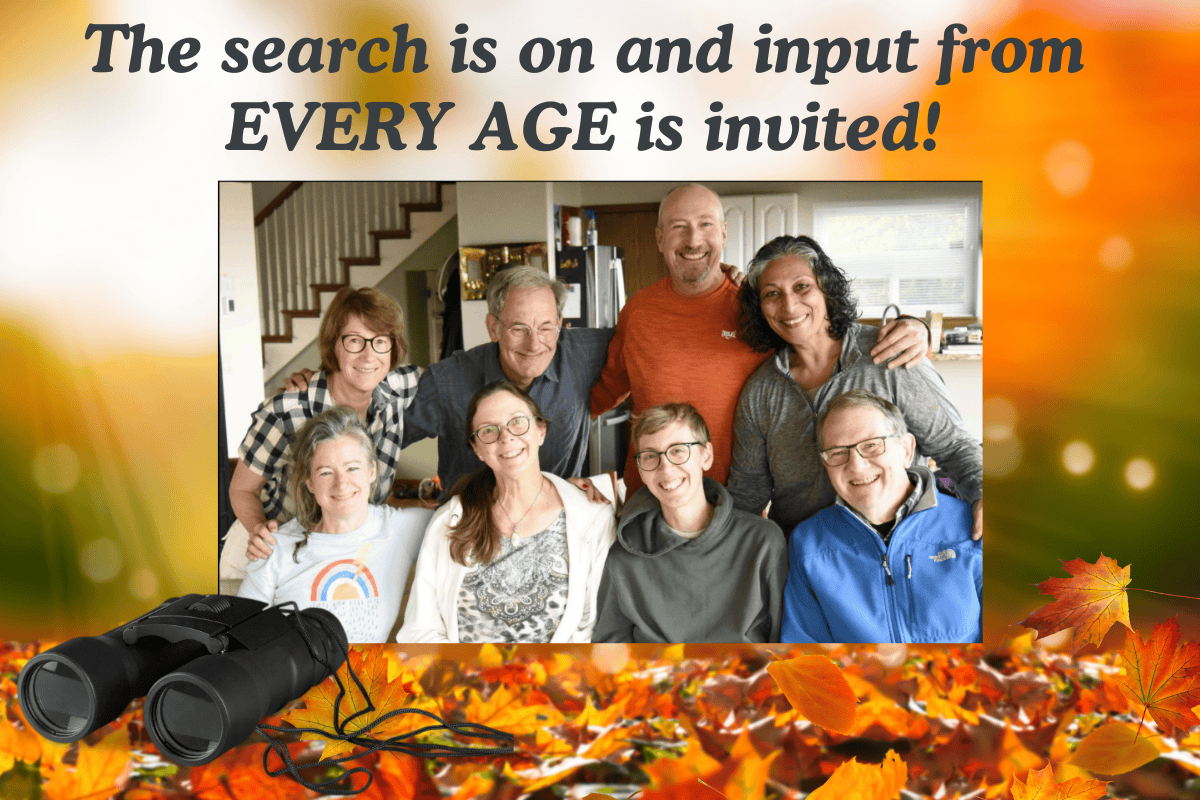
AN IMPORTANT NOTE FROM YOUR SEARCH COMMITTEE!
Hello RE families, the Ministerial Search Committee needs your help. Our Congregational Survey is one of the opportunities members AND friends of the congregation have to weigh in and be heard regarding our search process. Please fill it out here: https://forms.gle/cRfurPUXLKyXq4vE7. It should take about 10-15 minutes and if you have the time, your kids and youth can fill it out too! Also, please keep your eyes peeled for an announcement about a Cottage Meeting focusing on parents and guardians.
Thank you!
The MSC
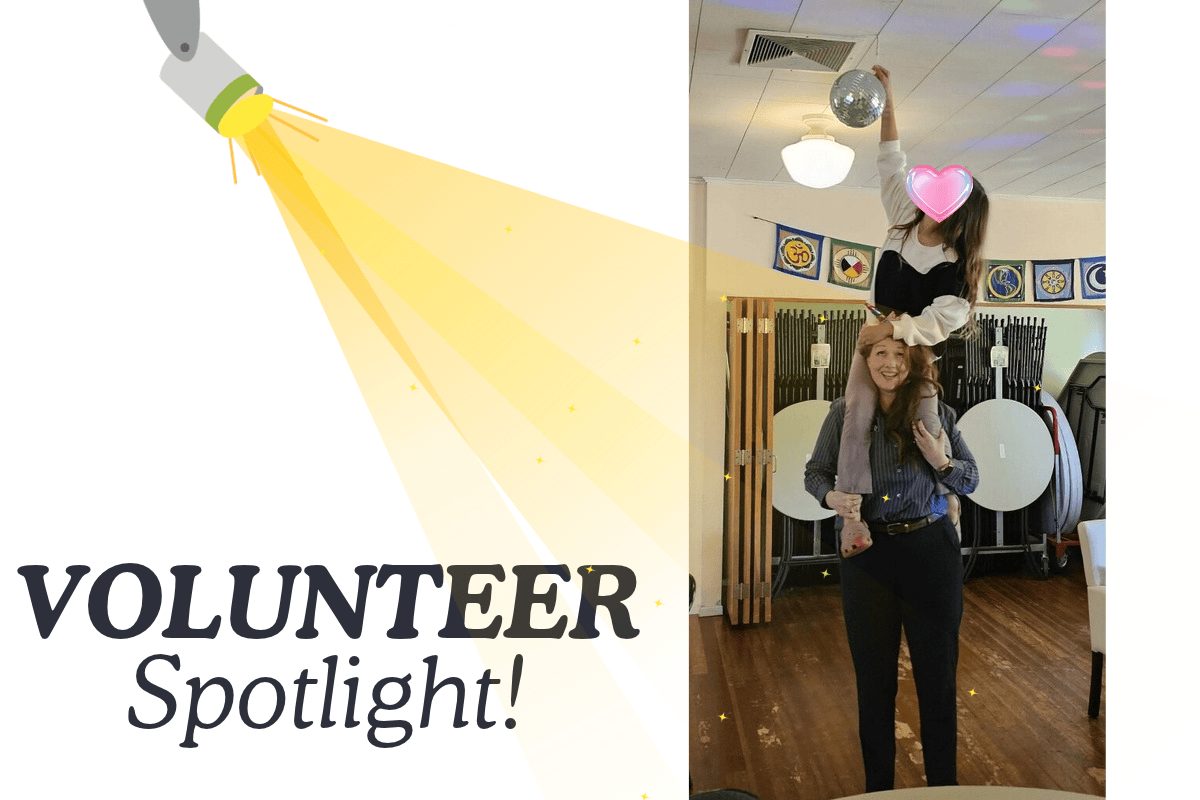
I promise we had parental approval for this!
Kylee is always such a joyful helper around the Fellowship! Most recently, she showed up to help set up for the ice cream social, which is an event that called for the temporary return of the social hall disco ball, if you ask me! What’s party music without a disco ball? Could I reach the disco ball hook? Nope. Was there a ladder close by? Also, nope. Thankfully, Kylee was not at all opposed to being hoisted on my shoulders after her mom gave permission, and all was well in Disco Town!
She did do other, more ordinary helping like hanging signs, holding doors, and being a welcoming presence. She even walked a child back to their parent for care after the fell down. What a fabulous example of our values in action!
Thank you, Kylee, for always being a ready help to those in need!
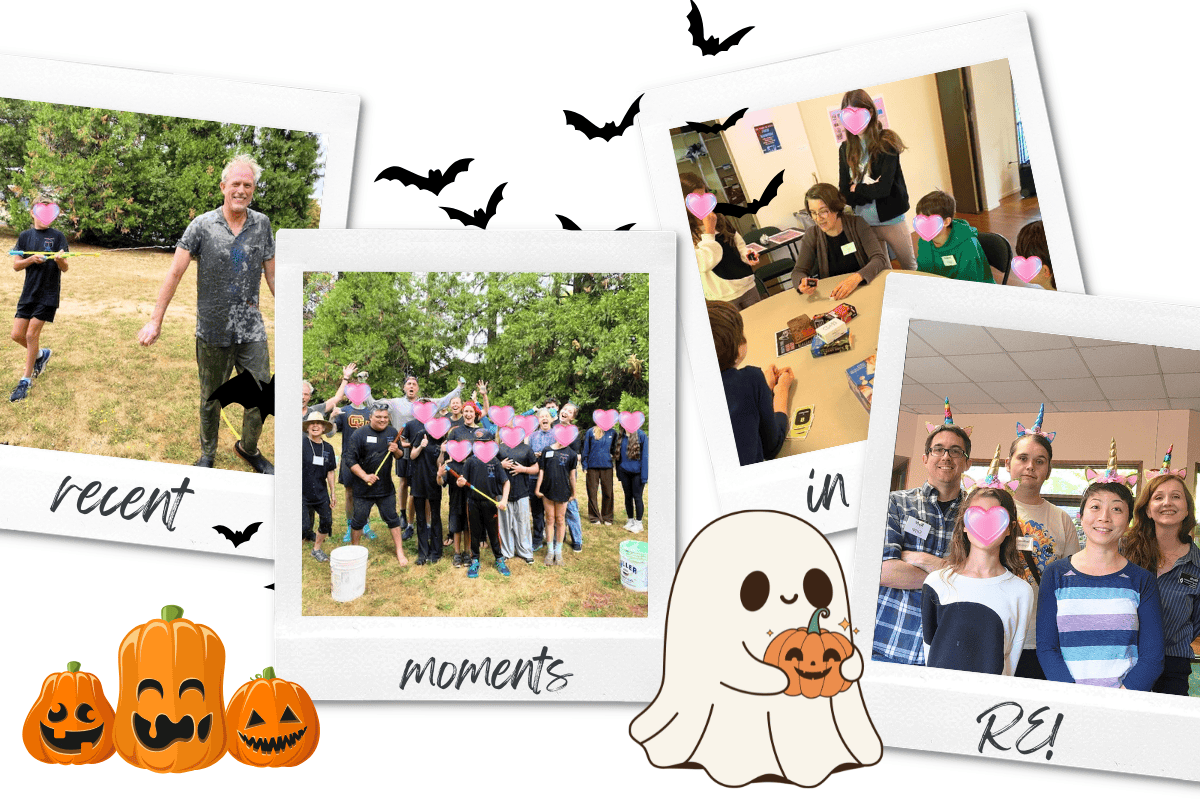
RIDICULOUS FUN HAS ALREADY BEEN HAPPENING!
We had so much fun with those of you who were able to come to the Great REspawn! 40 gallons of slime were sprayed and dumped on heads and, well, how often do you get the chance to clobber your minister with hot pink slime? I dare say few have had such an opportunity!
And we enjoyed seeing some of you at the ice cream social for games and a little too much sugar!
Kids who attended these events have already acucmulated power-up stickers on their avatar sheets to commemorate the fun!
If you missed the Great REspawn, you might have no idea what I’m talking about when I say power-up stickers or avatar sheets! If you would like a parent orientation packet to help you get the lay of the land in RE this year, let me know!
A NOTE FROM SKYLA
We’re doing some exciting curriculum work this year, but the most important thing we’re building is community.
Children develop a sense of belonging when they know who will be in the room, when someone notices they’ve arrived, when they have inside jokes and shared stories, when adults outside their immediate family know their names, and when Fellowship begins to feel like their place rather than somewhere their parents bring them.
So when you can, come!
We know families have sports and illnesses and multihousehold schedules and vacations and exhausting weeks when getting everyone into pants is victory enough. This isn’t a plea for perfect attendance.
It’s simply an invitation to think of showing up as part of your child’s faith formation. Relationships need repetition.
And when you can’t come? Grab a home quest and have the fun together, as a family!
YOU never quest alone. We’ll keep your place by the fire until we see you again in RE!
What do I need to know for children and youth on Sunday mornings?
Nursery aged children can check into the Rainbow Room starting at 9:50. All other children should start in the sanctuary with their families and leave together after the Time for All Ages. OMG! youth will sometimes run long, and do not need to be picked up by a parent. They will fiind you. All other ages must be picked up from their RE spaces at 11:15 OR, if the service runs longer than that, immediately after the service.
Rainbow Room is in Room 4 (downstairs, down the hall on your left, past the bathrooms)
Spirit Play is in Room 6C (downstairs, to the right of the stairs)
Seeker Space meets in Room 9 (upstairs and to the right)
OMG! meets in Room 10 (upstairs and across the mezzanine)
Where can I change diapers or breastfeed in peace?
We have 2 changing tables in the Fellowship. One is in the bathroom right beside the Rainbow Room in Room 4, through the classroom wing doors, down the hall, and on the left. The other is in the main section of the building. If you’re in the foyer, looking at the large, circular piece of art on the main wall, the bathroom with the changing table is through the glass door to the right of the art, and then immediately on your left, before you get to the kitchen.
Parents who are breastfeeding are welcome to attend to their child’s needs in the service, but if you’d prefer a quiet place for breastfeeding, we’ve got two great options for you. You will find a comfortable rocker in the library,which is also to the right of the foyer artwork, but this time you’ll pass the bathroom and go through the door to the right of the kitchen. You are also welcome to use the couches in Room 7, which isn’t generally in use during the service, and can be found through the double doors to the classroom wing, and then a sharp right, past the Business Manager’s office. You may be able to hear the sermon if you leave the library door open. In room 7, all you’ll be able to hear is the sound of the Spirit Play children adventuring.
How do I help my child who will inevitably miss a Sunday when the programming builds week after week?
We know that families have full lives, and no child needs perfect attendance to belong here. BUT our programming for most age groups does build, week to week so that we can go deeper than surface level together.
When your child misses a Sunday, stop by the Wayfarer’s Cache outside the RE office to pick up a Home Quest. You can explore it together at home, over dinner, or whenever it fits your family. Not as homework to catch up on, but as a way to stay connected to the stories, questions, and adventures their group is sharing. Whether your child is here every week or returns after time away, there is always a place for them in the journey. If your whole family is missing on a Sunday, email Skyla (dre@uucorvallis.org) and she’ll send you a digital copy!
What if I want to know what my children are learning or which adults will be with them on any given Sunday?
Maybe your child comes home and tells you what they learned and you’re left scratching your head. What the heck does a blindfolded maze have to do with RE? Or maybe you’ve got an anxious child at home who will feel better attending if they know exactly which adults will be there and what they’ll be learning about. No problem! Parents who attended the Great REspawn event can find the link to the “Scheduling Codex” in their parent welcome packet. Parents who missed or are joining us later in the year can request that link from Skyla (dre@uucorvallis.org). We don’t publish it online because making curriculum that we had to purchase publicly available on the website is out of covenant with the curriculum creators, but we’re happy for our parents to have access to that information. All you have to do is ask! We’re an open book!
Free Childcare for Fellowship Events
Thanks to a generous gift from the Bob Ozretitch Endowment fund, we can offer free childcare for Fellowship sponsored events that happen on UUFC property. Please fill out this form preferably two weeks ahead of the event, to help us have time to arrange a care team. You will be notified by email when a team has been found.
Parents Whatsapp group
Fellowship parents have formed a Whatsapp group for sharing, organizing informal hangouts, and anything else that would be better when shared with other UU families. This informal group can be found HERE. Please note, this group is not sponsored or moderated by UUFC in any official capacity.
Family Breakfast
Once a month, our families enjoy a potluck-style breakfast together. with pancakes, coffee, and usually some bacon provided. REgistrationHEREis appreciated, but not required, and we hope you’ll attend even if you don’t bring a contribution. Casual, as you are able, attendance is absolutley fine. We just love being together!
Monthly RE Newsletter
About once a month, usually near the first, Skyla sends a family newsletter with important dates, useful information for families, and usually some fun pictures of what your kids have been up to in their groups. Please open and read these newsletters! They include parent information that does not appear in our regular weekly announcements. For safety and privacy, we don’t publicly share dates and locations for activities where children or youth will be gathering without their parents, such as youth overnights and field trips, so the family newsletter is where you’ll find those details.
All families registered for Sunday morning RE are automatically added to the mailing list. There’s nothing extra you need to do. Just keep an eye out and open it when it arrives!
Children and youth need spaces where they can explore, play, question, take appropriate risks, build relationships, and become increasingly independent. They also need adults and systems they can trust.
UUFC’s Board-adopted policies establish expectations for the adults who work with children and youth, supervision, communication, transportation, privacy, and responding when something goes wrong. Our Standard Operating Procedures and Religious Exploration practices put those commitments into action.
Who works with children and youth?
Adults and youth who work with children and youth at UUFC must be approved by the Director of Lifespan Religious Exploration, agree to a code of ethics, provide current contact information, and must pass a criminal background check. Adults generally must also have attended UUFC for at least six months, although the Minister or Director of LIfespan Religious Exploration may make an exception, particularly for those who have come from another UU congregation and have a verifiable record of serving children well in that other covenanting space.
If a volunteer or program staff member is not acting or functioning appropriately, Board policy gives the Director of Lifespan Religious Exploration and Minister authority to release that person from their role immediately while the matter is investigated.
Supervision and boundaries
During designated Religious Exploration and Fellowship childcare activities, responsibility for supervision transfers from parents and guardians to the guides providing that program. Outside those designated times, children and youth remain under the supervision of their parent or guardian. This means that an adult has a line of sight to their children at all times, or another adult has agreed to be the supervising adult and the children know which adult is supervising them.
We are a covenanting community that takes both welcome and safety seriously. Our community includes people with a range of histories, including individuals with known sexual offenses who participate under specific safety covenants. Because we also welcome visitors, we cannot know the history or circumstances of every person on our property. Active supervision also protects children from more ordinary risks. When children are left unattended, normal childhood curiosity and boundary-testing can create opportunities for interpersonal harm, particularly in private or one-on-one spaces. And running or rough play in shared areas can pose a real danger to people with vulnerable bodies. For all these reasons, children should remain with their responsible adult or within a supervised Religious Exploration program while at UUFC.
All minors participating in our programs are to be directly supervised. Except for parents, adults should not be alone with children in cars or rooms. When circumstances make a one-adult/one-child situation necessary, doors are to remain open and incident reports are to be filled out documenting the scenario that required nonstandard supervision.
Guides and childcare staff are required not to assist children with toileting, and diaper changes are handled by parents or guardians. When a child needs bathroom assistance, they will be brought to the parent or guardian for such care.
UUFC’s policies call for training and support for RE Guides around sexuality, abuse, and related concerns. Annual safety training is required for RE Guides and childcare providers.
The Fellowship recognizes that a religious community may sometimes learn about circumstances in a child’s or youth’s life that require intervention. Board policy establishes our responsibility to provide a safe and nurturing environment; the procedures for responding when abuse is suspected are maintained in UUFC’s Standard Operating Procedures.
An Incident Report is required whenever a safety policy is not followed, an injury or property damage occurs, or a pattern of behavior develops for which documentation may be helpful.
Communication with youth
Our policies are designed to keep communication between adults and minors transparent.
A second adult—such as a parent, co-advisor, or the Director of Religious Exploration—must be included on emails or texts with minors. Adult volunteers do not initiate social-media contact with UUFC minors. If a young person contacts an adult mentor through an online platform, communication stays on the public side of that platform rather than moving into private chat. Adults may not communicate with minors using platforms that automatically delete the record of the conversation.
Transportation
Guides driving children or youth to Fellowship-approved activities must have a copy of current driver’s-license and insurance on file with the RE office. Drivers must be at least 24 when transporting youth to events.
When UUFC staff arrange transportation for a minor, the “rule of threes” applies: two unrelated adults must be in the vehicle with the child or children. Families may instead make private transportation arrangements for their own child and notify the appropriate RE adults in advance.
Privacy and images
UUFC protects personal information from unauthorized use or disclosure. Personal information is not sold, rented, or transferred to third parties without written permission, apart from the information shared with the Unitarian Universalist Association as a condition of congregational membership.
Parents or guardians give permission for image use in the registration form, and permission may be withdrawn by sending an email to dre@uucorvallis.org.
Childcare at Fellowship events
Childcare is part of making congregational life accessible to families. Advance childcare registration helps us make sure adequate care is available. Just like all other times when children are left in the care of non-parental adults at UUFC, childcare will be provided by 2 unrelated and background checked adults.
Want to know more?
These are plain-language summaries of UUFC’s Board-adopted policies and Religious Exploration procedures, rather than replacements for the policies themselves. Up to date and exact language for UUFC Board policies can be found in the filing cabinet section at the bottom of this website.
Registration is required HERE by October 27th, 2026.
This four-session series for congregational leaders takes an honest look at the gap between the community we aspire to be (or believe we already are) and the one some people actually experience. This is an invitation to see more clearly, and to lead differently as a result.
Those who took the Harvest the Power Leadership workshop last year are highly encouraged to attend, as a deepening of that work AND anyone interested in exploring community dynamics around power and belonging are very welcome.
Meetings will be on November 3rd, 10th, 24th, and December 1st – all Tuesdays – at 6 PM in Room 7.
PLEASE NOTE: The group will not meet on November 17th.
Fall Equinox is upon us, and the colors of the leaves show us that Mother Nature is shifting her energies.
Here at the Fellowship, I am observing groups gather together in shared spiritual nourishment: the Women’s Retreat and the Men’s Retreat planners are reaping the harvest of long summer planning and sharing it with others. The Coordinators of Elders Thriving in Community are offering wonderful programs monthly. I love seeing the foyer bubble with people arriving for those programs, and buzz with warm conversation as they leave informed and inspired.
I admire the hard work of the new Safety Team over the past six months. They have been meeting monthly and doing “homework” outside of meetings. As a result, this weekend there will be a training for lay leaders who have a role in streamlining a Sunday morning evacuation, if one were needed in case of emergency. Wolfgang Dengler has achieved that great feat of leadership: making sure that a role does not depend on just one person.
As the days get shorter, some people may find themselves beginning to have hints of the Winter blues. Please check on each other, and fire up your own self care tools. Tune in to a healthy Fall routine for your body and mind.
Please remember that generous donations create the Minister’s Discretionary Fund. This means that the minister has leeway to offer funds to members and friends who are going through a difficult time and would benefit from monies to help them bridge to a more stable place. Pastoral care takes many forms, and this is one.
With care, Rev. Alex Rev. Alex McGee is serving the Fellowship as Interim Minister and can be reached at rev.alex.mcgee@uucorvallis.org.
The Ministerial Search Committee will be hosting several small “Cottage Meetings” of 8-12 people each. We want you to have the opportunity to tell us in person how you view the congregation currently and what qualities you would like in our next minister. This important input from YOU will inform the Congregational Profile we publish to UUA ministers and help us find our best match. Each meeting will last an hour and be facilitated by two Search Committee members. Meetings will be offered at these times:
Sundays 9/27 – 10/18 in the Sanctuary at 11:45am Tuesday, 9/29 at 5:30pm on Zoom (there will be no Zoom meeting on 9/28) Wednesday, 9/30 at 10:00 am in Room 7
It is necessary to sign up for the Zoom meeting in advance with your email so that we can send you the Zoom link. To do that, please RSVP with this link: https://uufc.breezechms.com/form/search_cottage_26.
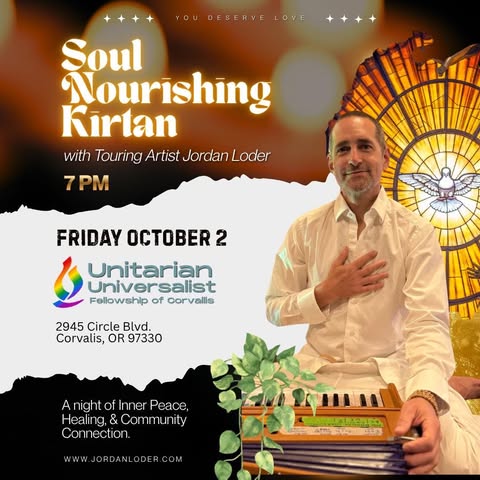
Soul-Nourishing Kirtan: A Night of Inner Peace, Healing, Music, and Community Song w/ Touring Sadhaka Jordan Loder ~ Breathe, Heal, Laugh, Cry, Sing, Release, Connect.
Jordan is a touring bhakti artist who has devoted his life to spreading the joy of inner peace through the power of music. After nearly a decade on the road supporting beloved artists Snatam Kaur, Deva Premal & Miten, Ajeet, Simrit, & Adam Bauer in roles as tour manager or sound engineer, he now carries on that living tradition in a unique style that is all his own. Buy tickets here: https://www.tickettailor.com/events/jordanloder/2428927
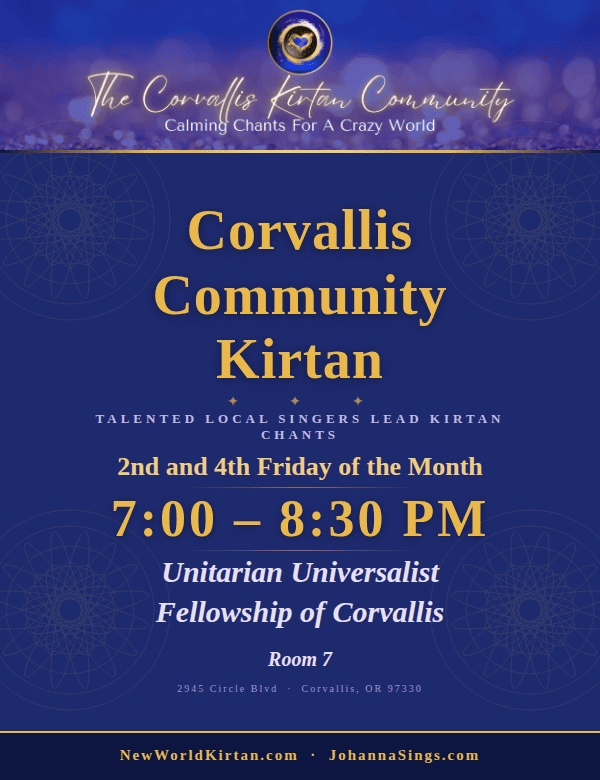
Community Kirtan is a gathering featuring talented local musicians who will lead us in kirtan chanting. It’s a peaceful way to end your week. All are welcome!
Registration gives our Religious Exploration team the information we need to welcome your child well, communicate with your family, understand important needs and care preferences, and respond appropriately in an emergency.
Please register children and youth who participate in any of our Sunday Religious Exploration programs:
Rainbow Room | Walkers–Pre-K Spirit Play | Grades K–3 Seeker Space | Grades 4–6 OMG! Youth Group | Grades 7–12
You don’t need to be a member of UUFC to participate in Religious Exploration.
It’s the same form for all ages this year. Children don’t develop according to a chart, and we’re happy to work with you to find the space where your child can most fully belong, participate, and grow. Once they’re registered, you do not need to fill out that form again for the rest of the year. You will also start receiving the monthly RE newsletter that will help you orient to what’s happening for children and famlies, and remind you when to register again next year.
You’re welcome to try us out before filling out a form.
On your child’s first visit, we’ll ask you to leave basic contact information with their Guides so we know how to reach you while they’re in our care. If they come back—and we hope they do!—that’s when we’ll need a full registration.
Visitor nametags are available at the Welcome Desk, and you’ll find QR codes linking to registration outside each Religious Exploration room and at the Welcome Desk if you decide to register while you’re here. But you can always REGISTER HERE before you arrive.
Why do we ask all those questions?
Some of the information on our registration form may seem more detailed than what we’d need just to put your child on a class list. That’s because registration isn’t really about making a class list.
It’s about caring for actual humans.
Knowing about allergies, access needs, communication styles, family structure, care preferences, and the people authorized to pick up your child helps our Guides respond to the child who actually walks through the door—not an imaginary average one.
Our Guides have access to the information they need to care for the children in their group. We also encourage you to talk directly with them about anything especially important for that particular Sunday. A form can give us useful information; a relationship lets us keep learning together.
Where do I take my questions?
Skyla King-Christison, Director of Lifespan Religious Exploration, is your best resource for answers to all things religious exploration! She can often be found in her office in Room 2 Sunday through Thursday from 7ish to 3ish, but leaves periodically for meetings around town. You can email her absolutely any question, or make an appointment to have a face to face chat using this link.