OMG! (Open Minds Group, grades 7-12)

A faith of their own.

OMG! is a place for youth to discover whether and how Unitarian Universalism belongs to them, not simply to their parents. Adolescence brings increasing freedom to decide what they believe, who they want to become, which communities they will belong to, and how they will move through a world their families can no longer fully mediate for them.

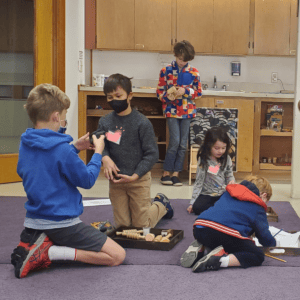
Through religious exploration, field studies, community, leadership, serious conversations, ridiculous fun, and increasing responsibility for shaping the group itself, youth practice that independence while they still have a community committed to helping them navigate it. They encounter other religious and philosophical traditions, examine their own beliefs, practice meeting difference with humility, and discover what it means to live their values alongside people who may not share all of them.

Guides co-lead with youth and step back whenever youth are willing and able to step forward. The program provides a safe, covenantal container, but youth increasingly help determine what happens inside it. They’re not just imagining the communities they want to inhabit; they’re practicing how to co-create them with other people.

Our hope is that they eventually bridge from our care into the adult world able to say: I know who I am. I know what I value. I have practiced living it. And I know who I can call when the world makes those things hard to remember.

What Sundays look like

Youth usually begin in the sanctuary and leave together after Time for All Ages. In OMG!, our familiar rhythms of lantern lighting, check-in, covenant, relationship, and exploration continue—but religious studies increasingly take the place of the immersive stories of Seeker Space.About once each month, that exploration moves beyond our walls through Religious Field Studies.Youth also occasionally gather for overnights and events with UU youth from other congregations, creating opportunities to experience Unitarian Universalism as something much larger than the church their family happens to attend.

Religious Field Studies

This year our youth encounter Unitarian Universalism alongside religious and philosophical traditions including Paganism, Hinduism, Judaism, Buddhism, Christianity, Islam, and Humanism. We want them to develop religious literacy and cultural curiosity—but also something deeper.


Understanding other traditions helps youth more clearly understand what it means to be UU: where our tradition shares wisdom and aims with others, where meaningful differences remain, and what they actually believe.


On field studies, we practice being humble pilgrims. Youth prepare questions in advance, enter other communities in a posture of curiosity and learning, and consider how their words and actions might be experienced by the people welcoming us. They represent both our congregation and our faith tradition with respect and care.
We hope this practice helps them enter the wider adult world able to encounter difference with humility, without needing to abandon their own identity in order to honor someone else’s.

Fun is part of the formation

The overnights, games, food, adventures, and sheer silliness aren’t rewards for doing the “real” religious education.They are part of it.Experiencing joy in UU spaces beyond their home congregation helps youth discover that this faith and these values can belong to them in more than one context—even when nobody from their family is there watching their participation.And friendships matter.The people who support a teenager’s becoming now can become the people they call years later when they’re having trouble remembering who they are.

Trust and confidentiality

Young people need relationships with trustworthy adults beyond their immediate families. Our Guides take that trust seriously. Information youth share about their lives is treated with care and confidentiality within the Guide team so that the adults responsible for the group can support them well.

That trust has necessary safety limits. Guides follow our Safe Congregation practices and legal reporting responsibilities when someone’s safety is at risk.

Honoring both confidentiality and those responsibilities is part of how we build relational and institutional trust.

Good to know

Youth who are here are not expected to perform enthusiasm. They may observe, take time to warm up, question what we’re doing, and participate differently from one another. And increasingly, whether they come at all becomes their choice.

That’s part of why we work so hard to make OMG! a place worth choosing.

Helpful links

Register for Childen and Youth for Religious Exploration →

Free Childcare Form →

Safe Congregation Policies and Practices →

Resources for Families →

Seeker Space (grades 4-6)

A practice space for the rest of the world.

Seeker Space is where children get to put the stories and values they’ve inherited to the test. This is an age when kids are increasingly able to notice contradictions, hold competing ideas, spot hypocrisy, and ask whether what they’ve been taught actually makes sense. We think those emerging capacities belong in religious life.

Through immersive adventures, role-playing, stories, games, and plenty of movement, Seekers practice questioning, disagreeing, discerning, collaborating, and figuring out what they believe. Rather than asking children simply to absorb our values, we give them opportunities to try those values out in complicated situations and notice what holds up.

This is also the first age at which our children create a covenant rather than simply working within classroom rules. A covenant is an agreement about how we will be together, and at this age children have increasing agency to participate meaningfully in creating, testing, and keeping those agreements.

The promise underneath it all is important: you can test what you’ve inherited here. You can share what’s hard and ask difficult questions. You can change your mind. None of that puts your belonging at risk

What Sundays look like

Seekers begin in the sanctuary with their families and leave together after Time for All Ages.

In Seeker Space, we light our lantern, check in, revisit our covenant, and then dive into immersive exploration. Role-playing adventures, values dilemmas, active games, and wisdom stories from around the world give children ways to explore big questions without spending Sunday morning sitting around intellectualizing them.

The games are fun on purpose. They’re also doing work underneath the surface: practicing deep listening, noticing context clues, honoring other people’s contributions, negotiating differences, making decisions together, and trying out ways of being in relationship.

Relationships matter here

Peers become especially important at this age. Kids are much more likely to want to spend Sunday morning here when the people they consider their people are here, too.Our Guides are becoming trusted confidants as well as teachers. They listen seriously to children’s needs, ideas, struggles, and hopes and offer warm, loving feedback. They shape the program in response to the group while still providing most of the structure and direction.Regular enough participation for acquaintances to become actual friends—and relationships that sometimes extend beyond Sunday morning—helps make Seeker Space a community children experience as their own.

Participation can look different

Children may opt out of any activity. They can watch. They can sit nearby. They can take their time.We believe engagement requires trust, and trust requires time. We also believe that more learning happens from the sidelines than most adults realize. Proximity to learning is often excellent learning.What children may not do is make participation difficult for everyone else. If a child’s way of opting out becomes disruptive or communicates to other children that their participation is embarrassing or “lame,” we’ll first invite them into a more relational way of being present. If that’s simply not possible for their body that morning—which can be entirely developmentally appropriate!—we’ll lovingly reunite them with their family in the sanctuary. They’re welcome to try again another Sunday.

Good to know

Seeker Space children begin Sunday in the sanctuary with their families and leave together for Room 9, at the top of the classroom wing stairs, after Time for All Ages.

Pick-up is at 11:15 AM, or immediately following the service if it runs long.

Helpful links

Register for Childen and Youth for Religious Exploration →

Free Childcare Form →

Safe Congregation Policies and Practices →

Resources for Families →

Spirit Play (grades K-3)

Play is spiritual work.

In Spirit Play, children encounter stories from our Unitarian Universalist tradition while building friendships, practicing agency, and discovering their own inner authority.

This is an age for discovering: I have an inner voice, and I can listen to it. Our Guides create a safe, Montessori-style container, resisting the pull to step in simply because children encounter friction, play with something differently than intended, or navigate a social dilemma in a way an adult wouldn’t choose. When children invite us into their play, we say yes—and let them lead.

Through all that playing, negotiating, wondering, choosing, compromising, and trying again, children discover both that it’s good to know what they want and that they belong to a community where other people’s wants matter, too.

Our hopes are concrete: a favorite story from our tradition, a Sunday BFF, and at least three adults at the Fellowship who know their name and would say hello if they met out in the world.!

What Sundays look like

Spirit Play children begin in the sanctuary with their families and leave together after Time for All Ages. Spirit Play happens in Room 6C, near the bottom of the stairs in the classroom wing.

Once in Spirit Play, we light our lantern, check in with one another, hear a story, and move into child-directed exploration in our Montessori-inspired space.an.

Participation can look different

Children may opt out of any activity. They can watch. They can sit nearby. They can take their time.We believe engagement requires trust, and trust requires time. We also believe that more learning happens from the sidelines than most adults realize. Proximity to learning is often excellent learning.What children may not do is make participation difficult for everyone else. If a child’s way of opting out becomes disruptive or communicates to other children that their participation is embarrassing or “lame,” we’ll first invite them into a more relational way of being present. If that’s simply not possible for their body that morning—which can be entirely developmentally appropriate!—we’ll lovingly reunite them with their family in the sanctuary. They’re welcome to try again another Sunday.

Why all this play matters

This year, children are hearing stories from our religious tradition, organized around our JETPIG values. We want them to know that they inherit a legacy of values-driven justice-making—and that someday they’ll help shape what this faith becomes.But the relationships they’re building are every bit as important as the stories.Shared stories, shared experiences, trusted adults, and real friendships are what transform “the church my family takes me to” into my community. Those relationships become especially important as children grow old enough to have much stronger opinions about whether they want to spend Sunday morning here.

Good to know

Spirit Play children begin Sunday in the sanctuary with their families and leave together after Time for All Ages.

We don’t serve snacks in Spirit Play, and Guides don’t provide diapering or toileting assistance. If your child needs bathroom help, we’ll come find you.

Pick-up is at 11:15 AM, or immediately following the service if it runs long.

Helpful links

Register for Childen and Youth for Religious Exploration →

Free Childcare Form →

Safe Congregation Policies and Practices →

Resources for Families →

Please send any questions about our children’s and youth programs to the Director of Lifespan Religious Exploration, Skyla King-Christison at dre@uucorvallis.org

Rainbow Room (new walkers-Pre K)

Belonging begins with being known and cared for.

Before children are old enough to wonder what they believe, they are learning whether this is a place where they are safe, known, and loved.

Some of the earliest work of faith formation doesn’t look much like religious education at all. Young children are learning to share space and resources, ask for what they need, reasonably expect that caring adults will respond, and notice the needs of other people. They’re also building a habitual relationship with this place and these people—one rooted in safety, familiarity, and care.

That foundation matters. Before children can deeply explore stories, values, theology, or questions of belief, they need a community they trust enough to explore them in.

Our hope at this age is wonderfully simple: this place feels familiar, these people feel safe, and I belong here.

What Sundays Look Like

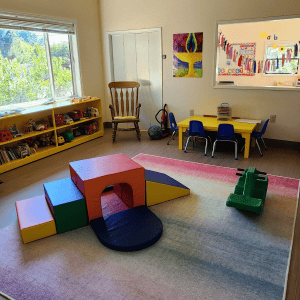
The Rainbow Room opens at 9:50 AM, allowing parents to bring children directly to Room 4 in the classroom wing and meet the Guides who will care for them.

Children play as friends arrive, then gather to sing, place a felt flame on our felt chalice, hear a story centered on our JETPIG values, and create something together. Afterward, there’s plenty of time to play with friends until families return.

Parents and caregivers are welcome to stay for as long and as often as they’d like. If you need to remain nearby but don’t want to miss the service, ask us about livestreaming the service into the room.

Your child, your family

You know your child and your family’s needs better than we do, and we want to know what works for you.

Maybe you desperately need 45 minutes to tend to your own spiritual life and would like us to try every reasonable soothing strategy before coming to find you. Maybe your family’s approach to attachment and consent means you’d like your child brought to you the first time they ask. Tell us.

Care preferences shared on your registration form are available to our Guides, and we encourage you to talk with the adults in the room at drop-off, too. That communication helps us care for your child in ways that support the values and practices of your family.

Babies, too?

The Rainbow Room is designed primarily for walkers through pre-K, but infants in arms are welcome when the number and activity level of children in the room make that safe.

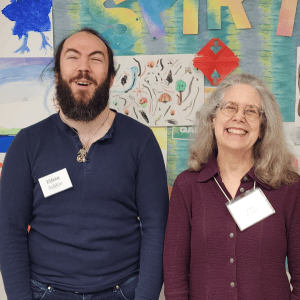
And when she’s not subbing in an RE space, you may occasionally find our Director of Lifespan Religious Exploration making her Sunday rounds with a happy baby on her hip—with parental permission, of course. Sometimes a grown-up needs a break, too. If you need that, please ask! Skyla knows who many of the happy baby holder in the sanctuary and social hall. There are plenty of willing surrogate grandparents just waiting to be asked. Ask for what you need!

Good to know

Children may visit once before registering; please leave contact information for the adult responsible for them with the Guides. After that first visit, we ask families to register for Religious Exploration.

We don’t serve snacks in the Rainbow Room, and Guides don’t provide diapering or toileting assistance. If your child needs bathroom help, we’ll come find you.

Pick-up is at 11:15 AM, or immediately following the service if it runs long.

Helpful links

Register for Childen and Youth for Religious Exploration →
Free Childcare Form →

Safe Congregation Policies and Practices →

Resources for Families →

Please send any questions you have about programs for children, youth, or parents to the Director of Lifespan Religious Exploration, Skyla King-Christison, at dre@uucorvallis.org