This morning we were asked to consider the different meanings of freedom, especially in context with the Fourth of July: political freedom, religious freedom, historical freedom, freedom from fear, freedom to share one’s truth, and inner, spiritual freedom. The piano works that I selected for today’s service all have a connection with freedom, albeit approaching the topic from different angles.
With yesterday’s holiday in mind, I opened with the American folk song Oh Shenandoah. While not directly about freedom, it has such ties to early America, due to its history as a shanty sung by boatmen traveling back and forth across the Missouri River. It’s sheer serendipity that Rev. Alex spoke of Monticello in her sermon, as both the Shenandoah Valley and Monticello share some commonalities. Both are famously “American” locations with connotations of liberty, the former with its frontier settlers and immigrants in search of freedom and land, the latter as the home of Thomas Jefferson, a vocal advocate for liberty and equality. However, the Shenandoah Valley and Monticello hold histories that contradict its associations of freedom; both utilized slavery as a major part of its operations and livelihood. It’s refreshing to see these two locations with ties to freedom and history beginning to demonstrate reform when sharing their stories today; Alex mentioned Monticello’s progress in telling not only Jefferson’s story but the stories of the those enslaved by him, and the National Park Service now includes a spotlight for African American history in the Shenandoah Valley. The simplicity of Oh Shenandoah belies the complex and not always picture-perfect history of its subject, but it’s sense of longing and spacious land, not to mention its tender lyrics have made it a beloved classic. There are numerous renditions of this old tune, but Keith Jarrett’s improvisation upon Shenandoah is one of my favorites.
The second piece in the prelude is more of a deep cut: one of the themes from the 1998 film The Mask of Zorro. While a swashbuckling period film based upon a pulp fiction vigilante doesn’t seem a likely source for music related to freedom, the historical backdrop of Alta California’s rule shifting from Spain to Mexico provides a theme of rebellion against oppressors. The film is good fun – even if one has to suspend their disbelief when watching an elderly Zorro portrayed with an English accent, thanks to Anthony Hopkins – and its music by the late, great James Horner swings between gloriously adventurous to tender and full of longing. The theme (called Diego’s Goodbye in the rendition provided here) recurs throughout the movie in different guises, first sweeping and heroic, next appearing as a delicate lullaby, then as the love theme. The entire score for the film was well-received; the pop version of the the theme underscoring the credits winning multiple awards, and some said that this original soundtrack surpassed Horner’s most lauded film score, Titanic.
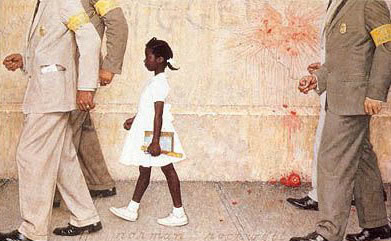
Today’s offertory may have only been known to true blue jazz fans: Hymn to Freedom, by the legendary Oscar Peterson. Years ago, David and I were about to celebrate our first wedding anniversary, and learned that Oscar Peterson would be performing at Dimitriou’s Jazz Alley in Seattle. As a young married couple, and as a young married couple of artists – David was in the middle of his doctoral program at the University of Washington, and I was working as a freelance pianist – the tickets for the concert were way out of our price range. But we both loved Oscar Peterson, and since he was already in his eighties, we knew there might not be many opportunities left to see one of the greatest jazz pianists of all time perform live. (Peterson passed away the following year.) So we put our Oscar Peterson tickets on our credit card, and enjoyed the once in a lifetime opportunity to hear this jazz legend perform. Hymn to Freedom became one of Peterson’s signature works, and its jazzy yet prayerful feel plus its lyrics by Harriette Hamilton made it one of the anthems of the Civil Right’s Movement.
That’s when we’ll be free
When every heart joins every heart
And together yearns for liberty
That’s when we’ll be free
When every hand joins every hand
And together molds our destiny
That’s when we’ll be free
Any hour (Any hour), any day (Any day)
The time soon will come
When men will live in dignity
That’s when we’ll be free
When every hand joins every hand
And together molds our destiny
That’s when we’ll be free
Any hour (Any hour), any day (Any day)
The time soon will come
When men will live in dignity
That’s when we’ll be free
When every man joins in our song
And together sing in harmony
That’s when we’ll be free
Any hour (Any hour), any day (Any day)
You know the time soon will come
When all men will live in dignity
And that’s when we’ll be free
Closing with another Civil Rights Movement anthem, I Wish I Knew How It Would Feel to Be Free, felt like the perfect way to end the service. The song’s text makes it clear that freedom hasn’t been obtained yet, but the music itself is upbeat, confident, refusing to give in to despair. Written by Billy Porter for his daughter, the song quickly took off and represented the fight for equality and justice for many. Covered by countless artists, the definitive performance is by Nina Simone, who sang the song countless times: sometimes slower, sometimes with more of a gospel feel, but always with hope and determination that equality and freedom would be possible one day.