
Uncategorized
Music Circle
Click a link to get the chords.
Behind the Music: How Deep is Your Love?

Romance and partnerships are what immediately come to mind when hearing “love” in February, but this compact little word is so much more complex and holds a multitude of meanings. You can love your significant other, your family of origin, your family of creation, your chosen family, your friends, and your dog. You can also love your neighborhood, your community, and those you teach or help. And, you can feel love for a little boy in a blue bunny hat who you’ve only seen on television, or for two strangers who are grieving the murder of their child, a healer whose last words to were to ask if someone was okay. Love can be romantic, platonic, hopeful or painful; it can be joyfully exuberant, or quietly steadfast. Today’s piano selections offered a glimpse of some of the ways love can appear in our lives: a promise, ardor, care, compassion, the sacred, healing, and affirming.
Make You Feel My Love is surprisingly simple in its presentation. There is no flowery language, dramatic imagery, or big musical/emotional climax; instead, the song is a quiet vow of steady, enduring love. Bob Dylan wrote this contemporary standard, but rather than hoarding the recording rights, he shared advance copies of the music with other artists, and the world was first introduced to Make You Feel My Love by Billy Joel. Bob Dylan eventually released his own performance, and as the song became a hit, countless other musicians covered this song, drawn to its tenderness and statement of unconditional love.
To Love You More sharply contrasts Dylan’s song about peaceful and plainspoken love with its sweeping, romantic intensity. Originally written as the theme song for a Japanese TV drama, it skyrocketed to the top of the charts around the world and is now one of the signature power ballads that Celine Dion is known for. With its theatrical dynamics, virtuosic vocal writing, and impassioned lyrics, To Love You More is a declamation of passion being shouted from the rooftops. Its energy and momentum are perpetual, and the fervor of both the text and music propel the song to its end, never relaxing.
Burt Bacharach’s What the World Needs Now Is Love asks us to think of love as a necessity; not just a personal emotion but a universally shared good that the world cannot function without. Its easy-going melody, conversational feel and repetition throughout the song send the message home that yes, “what the world needs now is love, sweet love. No, not just for some but for everyone.”
Elaine Hagenberg’s stunning O Love is probably the least known of all the music offered today but in the choral world it is considered a contemporary masterpiece and has been sung by choirs around the world. Its reverent text and luminous setting invite reflection and even played as a piano solo without lyrics, the harmonic dissonances and their resolutions evoke sighs that always transform into hope. The lyrics are based upon text by 19th-century Scottish minister George Matheson. Matheson’s words were originally sacred in nature, but can hold meaning for anyone whose heartache has been healed by love.
O Love that will not let me go,
I rest my weary soul in thee;
I give thee back the life I owe,
That in thy ocean depths its flow may richer, fuller be.
O Joy that seeks me through pain,
I cannot close my heart to thee;
I trace the rainbow through the rain,
And feel the promise is not vain
That morn shall tearless be.
The smooth groove of the Bee Gees’ How Deep Is Your Love reframes the age-old query: I love you…do you love me? This question really is many questions wrap into one, as it is also asking: Do I matter to you as much as you matter to me? Can I trust you? Am I safe with you? Will you leave me? Does my happiness – or sorrow – mean anything to you? Feeling loved isn’t just something that gives people a warm fuzzy feeling; it provides security, strength, and hope. Feeling loved is more important than ever in the world we live in today. In addition to make sure that the people we care about know that we love them, performing acts of love – to those in our lives, to strangers, to whole communities – is a way to deal with our frustration, our fear, our insecurity. We may not be able to solve homelessness, erase racism, or provide justice for all who have been wronged…but any difference we can make, no matter how small, is putting love into action. Whether in personal relationships, in community, or in the pursuit of social justice, let’s answer the question “How deep is your love?” with both words and deeds.
Behind the Music: A home where we can breathe, to sleep and dream without fear
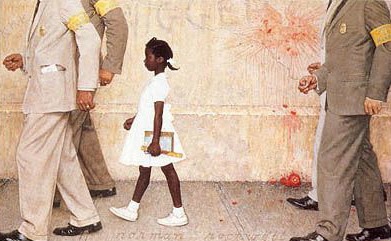
Today’s MLK Jr. service reflects on how the spiritual autobiography of our nation will be written, emphasizing how we listen, how we care for the next generation, how we respond to organized and normalized evil, and the importance of being open so we may serve a greater good. The piano selections for today’s service reflect these themes, naming pain, modeling courage, and inviting both reflection and action.
I began the prelude with a piano rendition of B.E. Boykin’s Stardust. While the music alone is gripping and powerful, it is the text and intention behind the music that is the most meaningful. In Stardust, the singers call for the following:
- “a home where we can run” in memory of Ahmaud Arbery, the young black man murdered in a 2020 hate crime.
- “a home where we can pray” in memory of the victims of the Mother Emanuel Church shooting
- “a home where we can breathe” in memory of George Floyd
- and a home “to sleep and dream without fear” in memory of Breonna Taylor.
Marcus J. Jauregui – conductor of the Pershing Middle School Treble Chorale Houston ISD and who commissioned this work – shared “When we sing, we pray twice [once with our voices, and again with our hearts], and it is my prayer that this piece stirs all who hear it to call for justice for people of color taken from this world before their time and without concern for their humanity.”
The prelude ended with the theme from To Kill a Mockingbird, a bittersweet piece that I’ve always felt conveys curiosity, lost innocence, and hope despite the ugliness in the world. The story of one good man, Atticus Finch, standing against the entrenched racism in his community, is so special to many of us, and is one of the rare instances of the film measuring up to the original book, as Gregory Peck and Mary Badham’s portrayal of the Atticus and Scout Finch pull at the heartstrings and are hard to forget. Though surrounded by fear and prejudice, Finch listens, teaches, and acts according to conscience, modeling moral courage in the face of hatred and injustice. This theme underscores the responsibility adults bear to model courage, empathy, and justice for those who come after us. By opening ourselves to see the world clearly and to respond to wrong, we honor those who have suffered and provide guidance for the next generation, showing how openness and moral action are inseparable.
Blowin’ in the Wind is a song that represents the sixties but has also been described as an anthem of the civil rights movement. R&B singer and civil rights activist Mavis Staples recalled in Martin Scorsese’s documentary No Direction Home that she was couldn’t believe how a young white man could capture the frustration and aspirations of Black people so powerfully. Soul singer and songwriter Sam Cooke was similarly impressed, making it a regular part of his repertoire soon after its release, and also shared that it inspired him to write his own civil rights anthem, A Change Is Gonna Come. The song asks us to listen deeply, be open to what we are asked to hear, and take responsibility to serve a greater good by refusing to ignore racism, honoring both the movement and the individuals whose lives have been affected by racial violence.
While Precious Lord, Take My Hand is included in the UU hymnal Singing the Living Tradition, it hasn’t been sung in Sunday services often. However, this felt like the perfect postlude for today’s service, as it was Martin Luther King Jr.’s favorite hymn. Its topics of exhaustion, grief, and fear – but also of courage! – was both comforting and inspiring for MLK, and he often asked Mahalia Jackson to sing the hymn at civil rights rallies. After his assassination, Jackson sang the song at his funeral, and in turn, Aretha Franklin sang it at Jackson’s own funeral. Originally composed after the death’s of composer Thomas Doersey’s* family, the song is a reflection on faith tested under pressure, reminding us that confronting entrenched inequality and hatred is difficult and wearying…but that we can still work toward a greater good and try to sustain justice, mercy, and care in the world. And because this was our postlude and meant to send folks off into the world, starting a new week, I made sure to play a more upbeat, blues-inspired arrangement of the song, because members of the UUFC love to dance their way out of the service!
*Not to be confused with bandleader Tommy Dorsey
Behind the Music: We’ll Build a Land

Leadership often begins with a call and not a plan; we feel a nudge – or push! – inside of us to step forward. The stories from our Council Chairs provided much food for thought on what fuels our own willingness to contribute and get involved in this community. Today’s piano music all led back to what it means to say yes and pitch in, as we each considered how we are being called to participate.
There was a touch of the traditional Scottish song Auld Lang Syne to acknowledge the new year, but the heart of this morning’s prelude was Carole King’s You’ve Got a Friend. The lyrics (“When you’re down and troubled, and you need a helping hand…you just call out my name”) remind us of the power of showing up for others and offering steady support. In the same spirit, contributing time, lending a hand, and joining a committee are ways to be a friend to the Fellowship, helping where it’s needed so the community can thrive.
I played We’ll Build a Land (121 in Singing the Living Tradition) for the offertory…I originally had a different song in mind, but as I listened to Nick, Carl, Scott, and Kathy speak, We’ll Build a Land kept popping in my head instead. This hymn’s message of hope and justice created by shared effort, and its dream of how together we can “build a land where all can dwell in peace” and “make a world of love and truth” were all reflected in the stories we heard. The care, support, and participation from today’s speakers and from every volunteer and congregational leader help shape this “land”, the Fellowship.
The decision to use Heroes by David Bowie for today’s postlude may have been influenced by its inclusion in the finale of Netflix’s sci-fi/coming-of-age series Stranger Things, but that doesn’t make it any less meaningful when it comes to the theme of the day. Heroism doesn’t always have to be grandiose or on a large scale – heroes can be people who step forward and give their time, energy, and passion. Even if it simply appears to be everyday participation in congregational life, volunteering, trying something new, and being an active member of this church makes for a better, richer Fellowship for us all.
Behind the Music: Light is returning, even though this is the darkest hour

Today marks a moment in time of stillness and reflection, the longest night of the year before the gradual return of light. There is a wealth of music about winter, night, darkness, and light, and I tried to select pieces that captured the ideas of cold December nights, the knowledge that the sun and warmth will return, and the small lights that both sustain us in the meantime, as well as the small lights that we put forth to try to sustain others.
The prelude opened with “Once Upon a December”, which comes from the 1997 movie Anastasia, a beautiful animated fairy tale loosely based upon the legend of Russia’s Grand Duchess Anastasia. Written by Broadway veterans Lynn Ahrens and Stephen Flaherty (who also penned “Ragtime” and “Once on this Island”), the protagonist’s words are full of wistful nostalgia:
Far away, long ago
Glowing dim as an ember
Things my heart used to know
Things it yearns to remember
And a song someone sings
Once upon a December
The well-known and beloved Clair de lune followed, by French Impressionist composer Claude Debussy. Clair de lune – which translates to “the light of the moon” – is a luminous musical portrait of moonlight spilling over a quiet landscape. In the context of a Winter Solstice service, Debussy’s shimmering harmonies suggest the reflection of the winter moon on snow or ice, as well as a sense of calm, wonder, and the peaceful magic of a winter night.
I was originally planning to play Don McLean’s “Vincent“, which is so wonderful and a personal favorite…or Eric Whitacre’s less-known but exquisite “Glow“. But after the youth performance and the activities that Skyla King-Christison had planned, it felt like the service called for the quiet warmth and intimacy of Jim Brickman’s arrangement of “Twinkle Twinkle Little Star” instead. The gentle piano lines and soothing childhood melody evoke the comforting glow of starlight on a dark, quiet evening. Even in the depths of winter, small points of light – hope, love, and connection – persist and guide us forward.
For today’s postlude, I played Charles Murphy’s “Light Is Returning”, a song we’ve sung at past solstice services. This musical celebration of the light’s return couldn’t be more fitting for the longest night of the year, and the lyrics serve as a promise of new beginnings:
Light is returning
Even though this is the darkest hour.
No one can hold back the dawn.
Let’s keep it burning;
Let’s keep the light of hope alive!
Make safe our journey through the storm.
One planet is turning
Circle on her path around the Sun.
Earth Mother is calling her children home.
Behind the Music: Room at the Table

When it comes to holiday meals, there’s a picturesque, Rockwell-esque vision that comes to mind for many of us: glossy brown turkeys, mashed potatoes with golden butter, steaming, savory vegetable dishes, and tempting desserts. For some, this is just something we look forward to and take for granted. For others, it’s just a childhood memory or something seen on television…not because they don’t believe in festive shared meals, but because they’re taking on extra shifts, scrimping and saving, or searching for a safe place to sleep and enough to eat.
Rev. Alex centered this Sunday’s service on the following: home and food are not just physiological needs, but carriers of culture and dignity. If someone doesn’t have a safe place to call their own, a place to prepare their own meals, how can they feel safe and secure? If one doesn’t have access to food, doesn’t this mean that they also lack agency in their choices about food that fits their heritage or their personal values? How and where food is produced carries ethical implications, meaning that not only is it difficult for some to obtain the food that they wish to eat, but it also means they are unable to give their business to farmers and local food providers. This in turn affects how farmers and local food providers support themselves, as well as impacting their ability to keep creating and distributing food ethically. Everything is connected. Because the holidays amplify both the joy of gathering around food and the heartache of those left out, Alex’s sermon reminded us of something simple: making room at the table (by supporting neighbors’ access to familiar, culturally meaningful food while preserving dignity, choice, and respect) is just part of being a member of this community. For many folks, the UUFC is a steady home away from home, and there is something sacred in how we feed and hold one another, making sure everyone belongs.
I initially selected today’s prelude, “She Used to Be Mine” simply for its indirect connection to food, but as Alex’s sermon unfolded, it seemed as if this song from the Broadway musical “Waitress” had been custom-designed for today’s service. “Waitress” is about Jenna, a pregnant waitress and pie maker who is trapped in an abusive marriage. She dreams of a better life for herself but lacks the financial resources to escape her controlling husband Earl. Throughout the musical, Jenna uses various pies as metaphors for her dreams and struggles, and it is eventually pie that becomes a beacon of hope for her: if she can bake an incredible pie and win the upcoming Springfield Pie Contest, the $20,000 prize is her ticket to freedom. In “She Used to be Mine”, Jenna sings vulnerably about who she used to be, before she needed her beloved pies to serve as comforting representations of her feelings, and as well as her escape plan.
I wasn’t familiar with Carrie Newcomer’s “Room at the Table”, but when Alex asked me to sing this song, it was immediately clear why she wanted this piece included in today’s service. Newcomer invites us to extend home and table outward to everyone. One can do this as an individual or with their family, but can also check out ideas and collaborate with others at any of the levels that Alex spoke about: the UUFC Secure Housing and Food for All Team, the Corvallis Unity Shelter, and the World Bank. The lyrics speak for themselves.
Room at the Table, by Carrie Newcomer
Let our hearts not be hardened to those living on the margins
There is room at the table for everyone
This is where it all begins this is how we gather in
There is room at the table for everyone
Too long we have wandered burdened and undone
But there is room at the table for everyone
Let us sing the new world in this is how is all begins
There is room at the table for everyone
There is room for us all
And no gift is too small
There is room at the table for everyone
There’s enough if we share
Come on pull up a chair
There is room at the table for everyone
No matter who you are no matter where you’re from
There is room at the table for everyone
Here and now we can be the beloved community
There is room at the table for everyone
There is room for us all
And no gift is too small
There is room at the table for everyone
There’s enough if we share
Come on pull up a chair
There is room at the table for everyone
There is room for us all
And no gift is too small
There is room at the table for everyone
There’s enough if we share
Come on pull up a chair
There is room at the table for everyone
Let our hearts not be hardened to those living on the margins
There is room at the table for everyone
Room at the table
This is our gathering
Room at the table for everyone
Room at the table
Room at the table for everyone
Everyone
The ode “Drink with Me” from Les Misérables by Claude-Michel Schönberg features a group of young nineteenth-century Parisian rebels seeking solace and companionship on eve of a battle which the singers know they will not all survive. There is no home, there is no table, but the passing of the wine has both a communal and communion-like feel as the group prepares to rise against the inequality, political suppression, and poverty imposed by their government. The musical’s overarching message goes hand-in-hand with today’s sermon it’s charge to help make home and food possible for those who are in need: “To love another person is to see the face of God.”
I really love hymn #407 from Singing the Living Tradition, “We’re Gonna Sit at the Welcome Table”. On top of letting its gospel style shine through and being just plain fun, the text again says it all. This song promises a seat, a shared meal, and a safe gathering to all, including those who are hungry, houseless, or excluded in other ways. The welcome table reminds us that sustenance and shelter aren’t just physical boxes to check off, but conduits for dignity, culture, connection, and personal moral codes.
We’re gonna sit at the welcome table.
We’re gonna sit at the welcome table
one of these days, hallelujah!
We’re gonna sit at the welcome table,
gonna sit at the welcome table
one of these days.
All kinds of people around that table.
All kinds of people around that table
one of these days, hallelujah!
All kinds of people around that table,
gonna sit at the welcome table
one of these days.
No fancy style at the welcome table.
No fancy style at the welcome table
one of these days, hallelujah!
No fancy style at the welcome table.
gonna sit at the welcome table
one of these days.
Behind the Music: Roots hold me close, wings set me free

This morning Reverend Alex invited us to reflect on desire as a spiritual quality. How can we learn to recognize and trust the spiritual desires within ourselves? When we learn to notice how our spiritual longings take shape as well as to honor the spiritual desires of others, our lives and the lives of those around us will become richer with meaning and purpose.
Massenet’s famous Méditation from Thaïs has been played at weddings, funerals, and all manner of occasions that call for a moment of beauty, emotional depth, and reflection. The opera Thaïs is centered upon Thaïs, a hedonistic courtesan whose life is filled with shallow pleasures and transactional relationships. Thaïs is jaded and nihilistic, living for luxury and the moment, without any substantial meaning to her existance. The monk Athanaël – whose motives aren’t entirely altruistic – warns Thaïs that only focusing on the good life and other superficial indulgences is ultimately empty and destructive. Thaïs is resistant to Athanaël’s urging, but while the intention behind his words isn’t pure, his message forces her to take a look at herself and as the Méditation is performed, Thaïs comes to the realization that she wants something deeper and real. After this revelation, Thaïs abandons her old life and her soul feels fulfilled when she dies at the opera’s conclusion.
Carolyn McDade’s beloved UU hymn “Spirit of Life” carries an astonishing amount within its six brief lines and can be sung in connection with compassion, justice, community, freedom, nature, and the mystery of being. Today, it served as an expression of desire in the form of openness and receptivity, especially in light of Alex’s explanation that desire sometimes comes in a form that we don’t recognize. The original hymn is beautiful as written, but for this service I used slightly altered chords to evoke a stronger sense of yearning, along with an open-ended cadence that suggests hope and continuation rather than a neat and tidy conclusion.
Leonard Cohen’s “Hallelujah” is such a wonderful example of really good song-writing. The melody is lovely and actually goes somewhere (rather than a repetitive phrase that depends on the lyrics or artist’s voice to make it enjoyable), the text is honest and vulnerable, the beautiful harmonic progressions underline the meaning of the lyrics, and the stark transparency of the accompaniment lets the well-crafted melody, words, and harmonies shine, rather than gilding the lily. I can think of no song that better expresses desires that are wistful and deeply human with this level of emotion and simplicity.
Norman Greenbaum’s “Spirit in the Sky” served as today’s postlude and while fast and fun, it still highlights a different facet of spiritual desire: a bright, declamatory longing for connection with something larger than ourselves. Greenbaum wrote this song after being inspired by a gospel music performance; he didn’t share the theology behind the music, but was profoundly moved by the joy and conviction he experienced. “Spirit in the Sky” captures a particular sort of desire so wonderfully – an energetic pull toward meaning, invigoration, and clarity – not to mention a wildly catchy guitar riff! May this postlude serve as a reminder to move toward hope, toward transformation, and toward whatever “sky” or horizon holds meaning for you.
Behind the Music: Let the river run, let all the dreamers wake the nation

If “work” is the body exerting physical and/or mental effort to affect change in one’s environment, and if “labor” is work that we are paid to do, how can we live our lives so that work is sacred and labor is just? These are questions that Rev. Alex posed to us, and below are the piano selections from today’s service connected to the dignity of work. These pieces hail from different eras and genres, but all speak in their own way of finding meaning, wellness, or peace in our work and labor.
While many of us are familiar with Fields of Gold, Sting’s pop/rock song about love and the passing of time, I find myself drawn to Eva Cassidy’s stripped down and vulnerable folk rendition rather than the original. Regardless of which version is preferred, once one looks past the surface ideas of love and the passing of time, this song is rooted in imagery of scenes from a certain type of work: fields, laboring outdoors, harvests. When listening to Sting croon about the shared time and effort of a romantic relationship, parallels can be found with the meaning in collaboration and valuing others within our work and labor. And of course, the lyrical melody and lovely harmonies of Fields of Gold are a gentle, lovely way to welcome our community into the sanctuary on a Sunday morning.
Coldplay’s “The Scientist” is filled with a number of poignant lyrics, but the most crucial words of all are “Nobody said it was easy”. We encounter this concept every day, in both our personal and professional lives. Even if the task at hand is “easy”, there are always challenges and struggles that can arise, be it with work or labor, practical or creative endeavors, large tasks or small. The song’s message to persevere, be accountable for our mistakes and pursue growth is an important one.
Normally a buoyant, upbeat song from Pete Seeger, If I Had a Hammer is a piece of music that inspires us to clap our hands, tap our toes, and sing along – but it’s also a call to action. As we sing about a hammer, a bell, a song, we are really singing about standing for justice, fairness, and hope, and our singing serves as a reminder that what we do matters most when it builds equity and uplifts others. (David Servias was originally slated to play the piano today, and If I Had a Hammer was originally his idea for the offertory!)
Let the River Run was not the planned postlude for today – some of the options I considered was to play the more traditional version of If I Had a Hammer or perhaps the Beatles’ Come Together! But after hearing Rev. Alex’s sermon, a different song came to mind, a song that represents possibility, dealing with disappointment and injustice, striving for change, and the hope for personal peace. While a lively finale of “If I Had a Hammer” would have been fun, “Let the River Run” just seemed very right for the end of today’s service.
Cancelled: Children’s Playground Sunday

Due to a combination of circumstances, the scheduled playground reopening and sidewalk chalk values gathering during the August 3rd service has been cancelled. We are all eager to get the kids back to the playground, so we will be watching for the opportunity to safely reschedule and will make an announcement here if such an opportunity arises prior to the scheduled start of Fall RE.