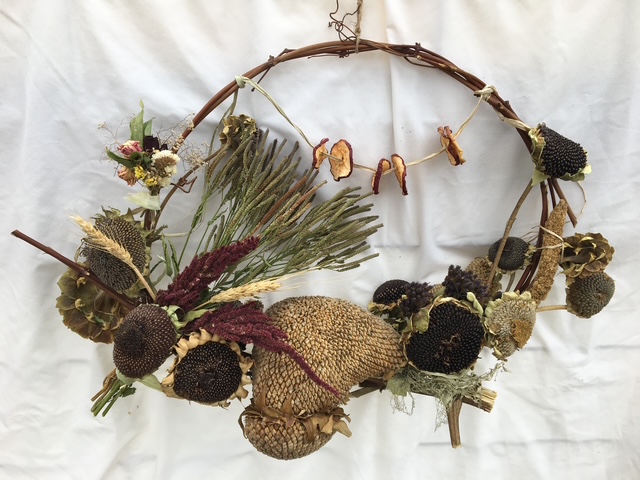
Elaine K. is making beautiful Birdseed Winter Wreaths as a fundraiser to buy stamps for the Democracy Action Team’s 2026 letter writing project. This project will educate voters who have fallen into disinformation and will get out the vote for this year’s primary and general election. Wreaths will be available in the Social Hall after Sunday Service, costing $15 for a small wreath and $30 for a large one; cash or check only.
In the 2024 election 53 writers at the Fellowship wrote a total of 25,530 letters and postcards. Rigorous studies have shown handwritten letters to be an effective way to increase voting. We started writing educational postcards in early January. Eventually we will write by Zoom, in person, and on our own, and have fun doing it! Stop by the Democracy Action Table if you want packets of postcards for writing.
Our UUFC Queerly Beloved social group will meet in Room 6C on February 1 after the service beginning at 11:45. All are welcome. We will be crafting, bring something to mend, all restorative handicraft are welcome!
We will be discussing important topics for the group, programming for the rest of the year, including revisiting our covenant, and the Sexuality and Gender Diversity justice team.
Would you like to help start new Chalice Circles and meet fellow congregants? We are looking for volunteers to join the Chalice Circle Team. No experience required. Please contact us at ChaliceCircles@UUCorvallis.org.
Interested in serving on the Board of Directors for the UUFC? The Board works as a group to manage the affairs, property, policies, and financial health of the Fellowship, maintaining the mission and vision over time. As a board member, your efforts and leadership can help to sustain and grow our community. We are looking for members who are excited about being part of the future of the UUFC and are inspired by Principles and Congregational Covenant of Right Relations. For more information talk to one of the members of the Nominating Committee – John Bailey, Kris Egan, Jim Good, Steve Strauss, Heather Thomas – or visit the Board information table in the Social Hall after the Sunday service.
Forgiveness can sometimes feel elusive or confusing. But humans throughout the ages continue to grapple with forgiveness. Let us consider what is ready to be heard in our hearts and put into action now.
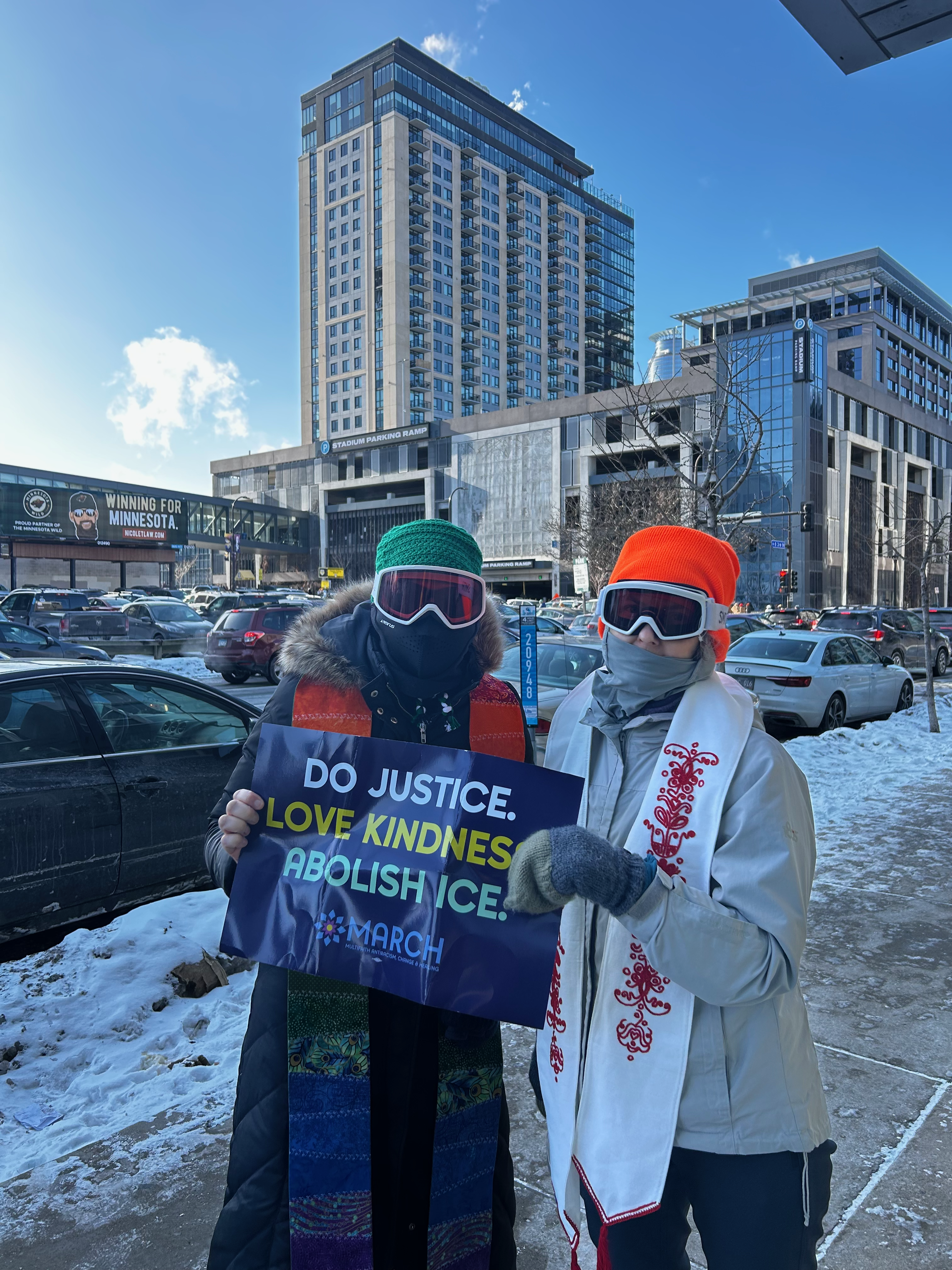
This Tuesday, January 27 at 6:30 PM at First United Methodist Church of Corvallis. Come hear Rev. Heather and Rev. Alex share what they learned from organizers in Minneapolis so we can start preparing here. Courage, creativity, and flexibility are key. Strengthening neighborly relations matters. The church’s parking lot is accessible from NW Jackson. Enter the church using the front steps.
The Building Enhancement team asks that everyone fill out their questionnaire about the Social Hall & Kitchen Improvement project. The questionnaire asks about a variety of uses and perceptions of the Social Hall and Kitchen, now and in the future. Your answers will help the team understand the range of thoughts and feelings the congregation holds about this project.
The questionnaire is available as a Google form accessed by clicking the button below.
Greetings UUFC Walkers, Amblers, Plodders, and Hikers: Did you know that UUFC has a Connect-Up group for you? There is a little problem, though. It now lacks an organizer/leader. Jim Wagner started the most recent incarnation of this group at the start of the COVID epidemic and the varying group visited many area locations from Mary’s Peak to Mac Forest to Cascade Foothills. Jim is no longer able to lead hikes. Priscilla Galasso has done this nicely for a while but is also moving on. Jim is willing to help find and assist someone who can lead hikes. Organizing is just a matter of picking a location that fits likely weather and participants; Jim can particularly help with this. Your primary responsibility would then be a few hours, typically on the last Saturday of each month, enjoying both the personal connections and the marvelous places that are accessible by trail or path. If you, or several of you, can fill the role of hike leader and/or organizer, please contact Jim Wagner.
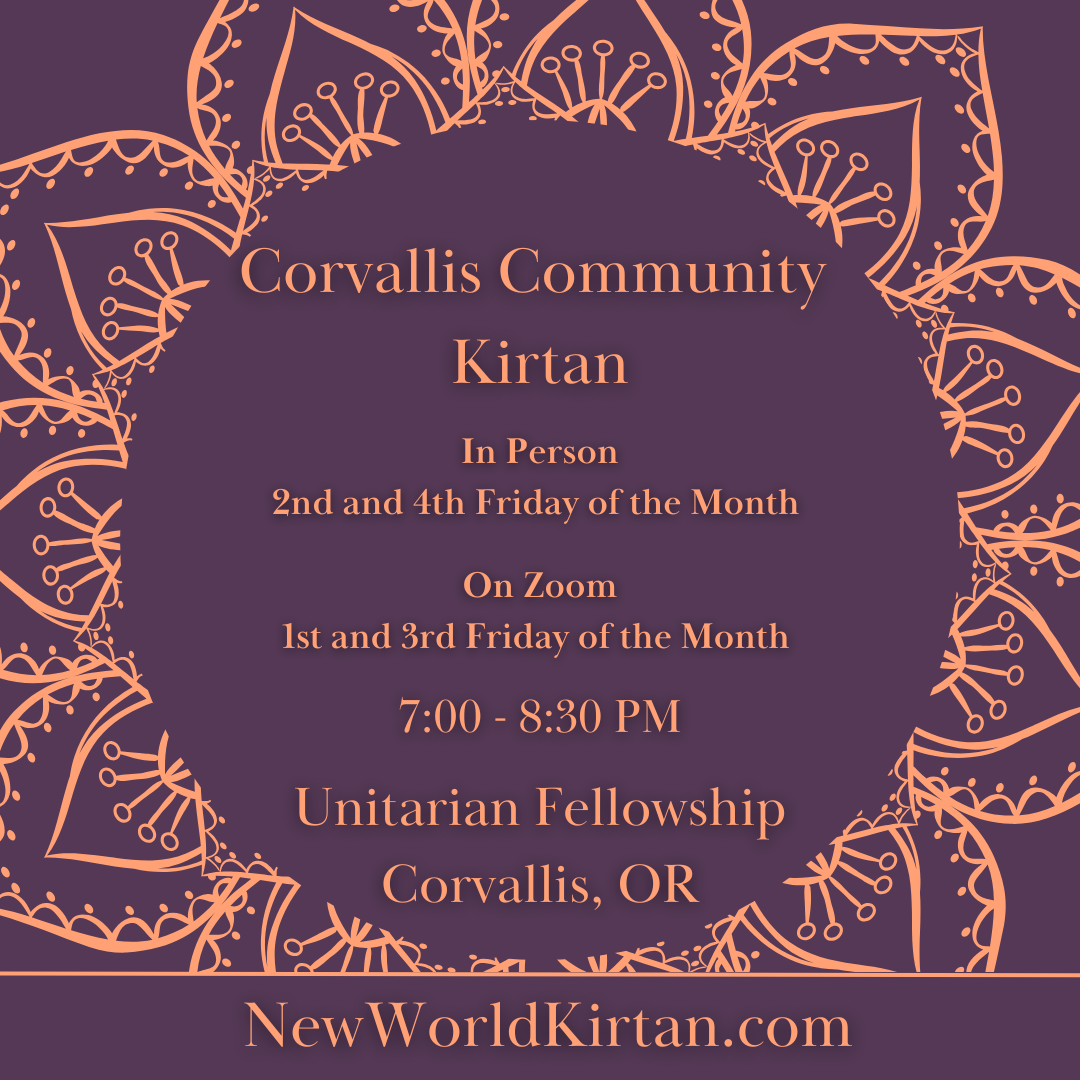
This Friday, January 23, please join us for Community Kirtan in Room 7, 7-8:30 pm. Community Kirtan happens on the 2nd and 4th Fridays of the month, and features talented kirtan singers from the community who lead us in sacred song. It’s a beautiful way to calm the mind after a busy week, a fun way to connect with the community, and … we have snacks!
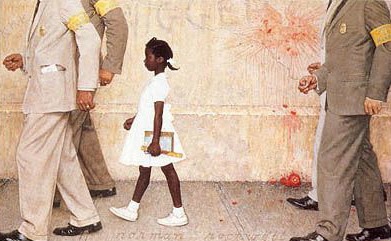
The Problem We All Live With, Norman Rockwell (1964)
Today’s MLK Jr. service reflects on how the spiritual autobiography of our nation will be written, emphasizing how we listen, how we care for the next generation, how we respond to organized and normalized evil, and the importance of being open so we may serve a greater good. The piano selections for today’s service reflect these themes, naming pain, modeling courage, and inviting both reflection and action.
I began the prelude with a piano rendition of B.E. Boykin’s Stardust. While the music alone is gripping and powerful, it is the text and intention behind the music that is the most meaningful. In Stardust, the singers call for the following:
“a home where we can run” in memory of Ahmaud Arbery, the young black man murdered in a 2020 hate crime.
“a home where we can breathe” in memory of George Floyd
and a home “to sleep and dream without fear” in memory of Breonna Taylor.
Marcus J. Jauregui – conductor of the Pershing Middle School Treble Chorale Houston ISD and who commissioned this work – shared “When we sing, we pray twice [once with our voices, and again with our hearts], and it is my prayer that this piece stirs all who hear it to call for justice for people of color taken from this world before their time and without concern for their humanity.”
The prelude ended with the theme from To Kill a Mockingbird, a bittersweet piece that I’ve always felt conveys curiosity, lost innocence, and hope despite the ugliness in the world. The story of one good man, Atticus Finch, standing against the entrenched racism in his community, is so special to many of us, and is one of the rare instances of the film measuring up to the original book, as Gregory Peck and Mary Badham’s portrayal of the Atticus and Scout Finch pull at the heartstrings and are hard to forget. Though surrounded by fear and prejudice, Finch listens, teaches, and acts according to conscience, modeling moral courage in the face of hatred and injustice. This theme underscores the responsibility adults bear to model courage, empathy, and justice for those who come after us. By opening ourselves to see the world clearly and to respond to wrong, we honor those who have suffered and provide guidance for the next generation, showing how openness and moral action are inseparable.
Blowin’ in the Wind is a song that represents the sixties but has also been described as an anthem of the civil rights movement. R&B singer and civil rights activist Mavis Staples recalled in Martin Scorsese’s documentary No Direction Home that she was couldn’t believe how a young white man could capture the frustration and aspirations of Black people so powerfully. Soul singer and songwriter Sam Cooke was similarly impressed, making it a regular part of his repertoire soon after its release, and also shared that it inspired him to write his own civil rights anthem, A Change Is Gonna Come. The song asks us to listen deeply, be open to what we are asked to hear, and take responsibility to serve a greater good by refusing to ignore racism, honoring both the movement and the individuals whose lives have been affected by racial violence.
While Precious Lord, Take My Hand is included in the UU hymnal Singing the Living Tradition, it hasn’t been sung in Sunday services often. However, this felt like the perfect postlude for today’s service, as it was Martin Luther King Jr.’s favorite hymn. Its topics of exhaustion, grief, and fear – but also of courage! – was both comforting and inspiring for MLK, and he often asked Mahalia Jackson to sing the hymn at civil rights rallies. After his assassination, Jackson sang the song at his funeral, and in turn, Aretha Franklin sang it at Jackson’s own funeral. Originally composed after the death’s of composer Thomas Doersey’s* family, the song is a reflection on faith tested under pressure, reminding us that confronting entrenched inequality and hatred is difficult and wearying…but that we can still work toward a greater good and try to sustain justice, mercy, and care in the world. And because this was our postlude and meant to send folks off into the world, starting a new week, I made sure to play a more upbeat, blues-inspired arrangement of the song, because members of the UUFC love to dance their way out of the service!